July 13, 2026
Custom Orthotics vs. Over-the-Counter Insoles: What's Actually Different
Custom orthotics and OTC insoles solve different problems. This guide breaks down the clinical, cost, and fit differences so you know which one you actually need.
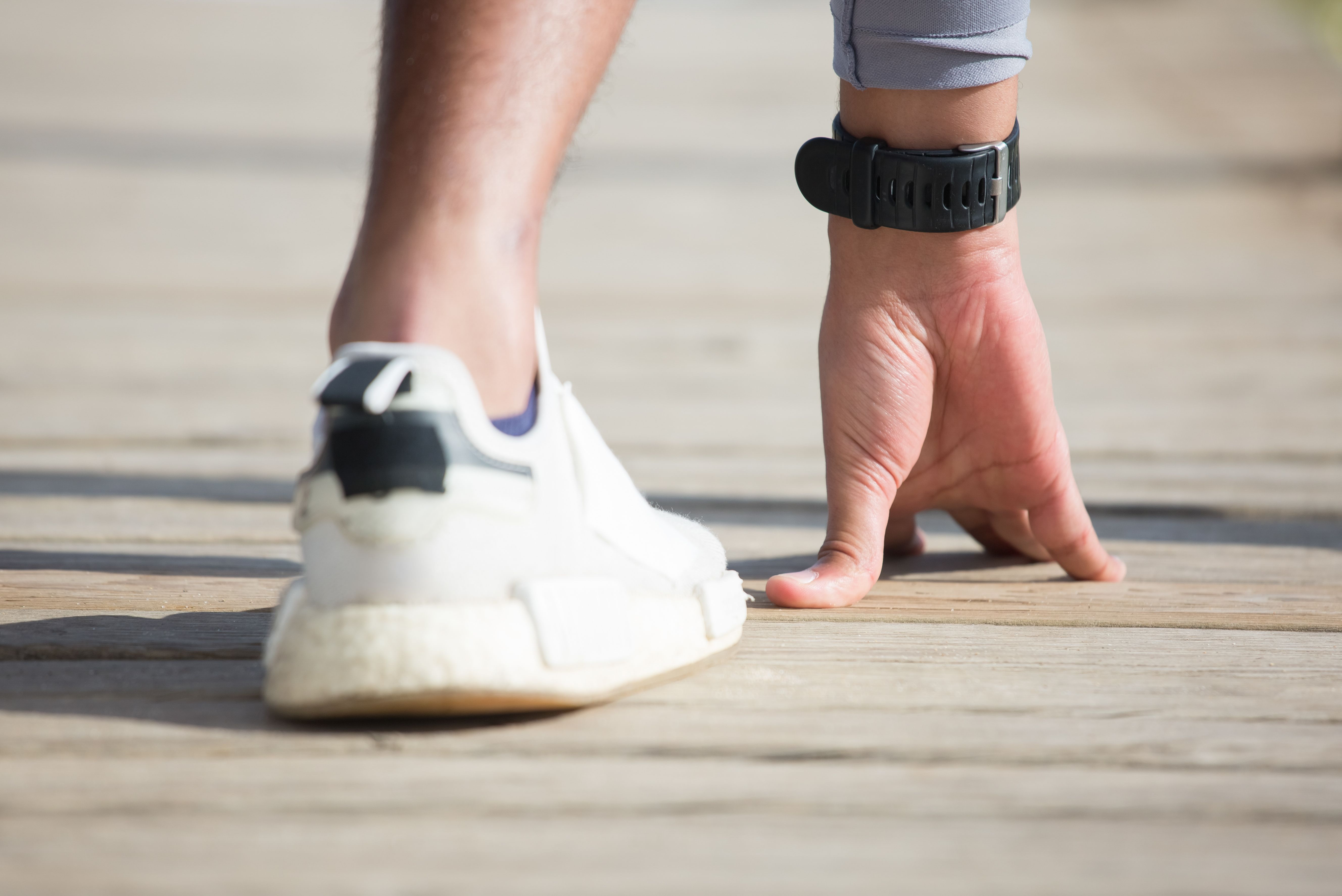
The phrase "orthotic" gets used for everything from a gel heel pad to a carbon-fiber prescription device, which creates real confusion. Let's define each category precisely before comparing them.
Over-the-counter (OTC) insoles also called prefabricated insoles, shoe inserts, or store-bought arch supports, are mass-produced foot inserts manufactured in standard sizes to fit a general range of foot shapes. They're sold in pharmacies, sporting goods stores, and online without any clinical assessment. The materials vary widely: ethylene-vinyl acetate (EVA) foam, polyurethane (PU) foam, memory foam, and gel are the most common. Each material behaves differently under load. EVA foam is lightweight and available in varying densities. Higher-density EVA provides firmer arch support, while lower-density EVA prioritizes cushioning. PU foam offers superior long-term durability and compression resistance compared to EVA, making it a better choice for occupational insoles or anyone whose insoles tend to flatten quickly. Memory foam conforms to the shape of your foot but tends to compress permanently with extended use, reducing effectiveness after roughly three to four months. Gel materials are typically placed in targeted areas like the heel or forefoot for localized shock absorption, but they can't provide structural support on their own and are usually combined with an EVA or PU base layer.
Custom orthotics also called prescription orthotics, custom foot orthoses, or prescription insoles, are medical devices fabricated from a three-dimensional mold, plaster cast, or digital scan of your individual foot. According to the American Podiatric Medical Association, prescription orthotics are crafted for you and no one else; they match the contours of your feet precisely and are designed for the way you move. The APMA notes that orthotics are only manufactured after a podiatrist has conducted a complete evaluation of the patient's feet, ankles, and legs. Materials used in custom fabrication include polypropylene, carbon fiber, and medical-grade EVA. These materials are chosen for their capacity to hold a patient-specific shape under repeated loading across years of wear.
Prescription orthotics fall into two broad clinical categories. Functional orthotics are designed to control abnormal foot motion and are typically fabricated from semi-rigid materials such as plastic or graphite. Accommodative orthotics are softer devices designed to provide cushioning and pressure redistribution rather than motion control. These are commonly prescribed for diabetic foot care, arthritis, or painful calluses. Some prescriptions combine characteristics of both into a hybrid device.
The practical dividing line: an OTC insole is a consumer product, and a custom orthotic is a medical device built around a documented diagnosis and an individual foot shape.
The insole market has expanded significantly, and a new category, often called "semi-custom" or direct-to-consumer (DTC) orthotics, now sits between OTC and true prescription devices and often blurs the line. DTC providers use smartphone-based 3D scanning or foam impression kits to capture foot shape and have a device fabricated at an orthotic lab, typically skipping the in-person clinical evaluation. That evaluation is the clinical foundation the orthotic prescription is built on; without it, a lab can't fabricate a device that actually corrects a specific biomechanical problem. Buyers should understand this distinction clearly when assessing any product marketed as "custom."
At the same time, search results frequently oversimplify the research landscape, either dismissing custom orthotics as overpriced or overstating their clinical superiority over well-chosen OTC products. The evidence is more nuanced than either extreme, and understanding it helps you make a better-calibrated decision about your feet and your money.
At Arch Support Lab, we've tested 100+ products across 50+ brands, and one pattern holds consistently: the gap between custom orthotics and OTC insoles matters most when there's a specific structural or biomechanical problem to address. When the need is general fatigue, mild cushioning, or support for footwear that lacks structure, well-designed OTC insoles can perform reasonably well. The critical question isn't "which category is better", it's "which is right for this specific foot and this specific problem."
Understanding how each product is made explains most of the functional and cost differences between them.
OTC insoles are mass-produced using predetermined shapes or pre-made models, often via injection molding or computer milling. They're designed to fit a general population, which means they follow a generic arch profile that suits some feet and misses others entirely. If your arch height, foot width, or gait pattern falls outside the average range, an OTC insole may not sit correctly and may offer limited real benefit.
The key tradeoff in OTC materials is between cushioning and structural integrity. Most retail insoles use memory foam or soft gel as the primary contact layer. These materials cushion the foot but don't support it structurally. Under the pressure of a walking stride, they compress and can leave the arch without meaningful support. Better-constructed OTC insoles use a dual-density EVA base, with a firmer shell layer for arch contact and a softer top layer for pressure distribution. These perform better on two of the five criteria Arch Support Lab uses in its rubric testing: arch contact over time and pressure distribution.
Replacement windows for OTC insoles are typically 6 to 12 months for normal daily use, though memory foam top layers often degrade faster than the stated window. That's a point worth noting when calculating value per year of use, the fifth criterion in the Arch Support Lab rubric.
Most podiatrists make a plaster mold of the patient's foot, or use a 3D laser scanner for a digital capture, and send it to a laboratory with a written prescription. Lab technicians then fabricate a device to the doctor's exact specifications: shell stiffness, arch height, heel cup depth, posting angle, and top cover material are all prescribed individually. The fitting process involves a clinical assessment of gait, foot structure, and specific symptoms. Weight-bearing captures are generally preferred because they mirror how arches actually flatten under real-world load.
Custom orthotics are typically made from polypropylene, carbon fiber, or high-grade EVA. These materials are selected because they're durable enough to maintain a specific shape across 12 years of use. A well-fabricated rigid orthotic generally lasts three to five years with normal use, compared to the six to 12 month window of most OTC foam products. Over a multi-year period, that durability difference can meaningfully shift the value-per-year calculation, even accounting for the higher upfront cost.
The evidence on custom orthotics versus OTC insoles is more complicated than either side of the debate typically acknowledges, and it's worth spending time here because the research is often misquoted in both directions.
For plantar fasciitis, the condition most commonly used to justify custom orthotics, a review of randomized controlled trial evidence shows that all types of foot orthoses, including both custom and prefabricated options, can decrease pain and improve foot function. That finding means OTC insoles aren't useless for plantar fasciitis; for many people with mild to moderate early-stage symptoms, a well-chosen prefabricated insert may reduce pain meaningfully. A Canadian health technology assessment referenced in clinical literature noted limited or inconsistent evidence for superior effects of custom over OTC insoles in general adult populations for short-term pain reduction.
However, condition-specific evidence shifts the picture. A 2018 randomized controlled trial published in The Foot found that patients with plantar fasciitis using custom orthoses experienced greater pain reduction and functional improvement compared to those using prefabricated insoles. For specific foot types, including cavus (high arch) feet, rheumatoid arthritis, and juvenile idiopathic arthritis, custom orthotics have shown benefit over prefabricated options in reducing pain and improving function. In diabetic foot care, evidence-based guidelines strongly recommend custom orthotics for patients with deformities, pre-ulcerative lesions, or healed ulcers, where the consequence of inadequate pressure distribution is a foot ulcer rather than just discomfort.
The honest read of the evidence is this: for mild, general, or early-stage symptoms without a structural diagnosis, a quality OTC insole is a clinically defensible first step. For specific structural diagnoses, significant biomechanical abnormalities, diabetic foot management, or cases where conservative OTC treatment has already failed, custom orthotics may offer meaningful advantages that the evidence supports. The key phrase there is "may reduce" because insoles, whether custom or OTC, support and relieve; they don't treat or cure an underlying condition.
This article is not medical advice. Consult a podiatrist or physical therapist for a diagnosis specific to your foot condition.
Most frustration with both OTC insoles and custom orthotics comes from the same root problem: choosing a product category before identifying the problem that needs solving. Here are the most common missteps and what drives them.
Buying OTC insoles for a structural problem. OTC insoles are mass-produced to fit an "average" foot. They lack the precision needed to address individual structural abnormalities like overpronation, high arches, or leg-length discrepancies. When someone with a diagnosed structural issue buys a pharmacy insert based on packaging language and gets no relief, it's not necessarily because insoles don't work. It's because the wrong tool was selected for the job.
Assuming custom orthotics automatically outperform OTC insoles for every use case. The research doesn't support a blanket superiority claim. For mild fatigue, general cushioning, or adding structure to flat-soled shoes, a well-constructed OTC insole can provide meaningful relief without the cost or wait time involved in a clinical prescription process. The error is treating "custom" as automatically better rather than as more specifically matched to a documented problem.
Confusing DTC "custom" products with clinician-prescribed orthotics. Some retail or online companies market products as "custom" when they're prefabricated or only semi-customized. These products may cost as much as a true custom orthotic but aren't tailored to a patient's specific biomechanics in the same way, and may not deliver the targeted correction a clinician-prescribed device would.
Skipping the clinical evaluation entirely. The biomechanical exam, where a podiatrist watches how you walk, measures your arch height, assesses ankle flexibility, and identifies the mechanical source of your pain, is the clinical foundation a custom orthotic prescription is built on. Without it, the device a lab fabricates can't be meaningfully calibrated to your specific problem. Buying an OTC insole and self-treating indefinitely when symptoms persist or worsen is a similar error in the other direction.
Under-replacing OTC insoles. Memory foam top layers, in particular, degrade faster than the outer shell of an OTC insole, meaning the product may feel intact while offering significantly reduced arch contact and pressure distribution. Arch Support Lab's rubric criterion for arch contact over time exists specifically to measure this. It's one of the dimensions that most separates higher-performing OTC products from lower-performing ones in hands-on testing.
Whether you're shopping for an OTC insole or beginning the process of getting custom orthotics, the same functional questions apply. Arch Support Lab evaluates every product against its five-point rubric, and those criteria map directly onto the questions any buyer should ask.
Material durability. Does the product hold its shape under repeated loading, or does it compress and flatten within weeks? For OTC insoles, look for higher-density EVA shells rather than soft memory foam bases. For custom orthotics, ask what shell material is being used. Polypropylene and carbon fiber hold shape significantly longer than softer EVA under heavy daily use.
Arch contact over time. Does the arch contour maintain consistent contact with the arch of your foot after weeks and months of use, or does it gradually lose its shape and allow the arch to collapse? This is one of the most practically significant failure modes in both OTC and lower-quality custom devices. In Arch Support Lab testing, this criterion separates products that provide durable support from those that feel supportive initially but degrade quickly.
Pressure distribution. Does the insole redistribute load away from high-pressure points, including the heel, metatarsal heads, and plantar fascia insertion, or does it simply add overall cushioning? Structural support and targeted pressure distribution are different things, and not all insoles deliver both. Custom orthotics, when properly prescribed, can be calibrated to address specific pressure points that prefabricated designs cannot target without a patient-specific mold.
Breathability. Does the top cover material allow moisture management during extended wear, or does it trap heat and perspiration? This matters more for people wearing insoles in closed athletic or work footwear for many consecutive hours. It's also a criterion that varies more within product categories than between them. Some OTC insoles outperform some custom orthotics on breathability, depending on top cover material choices.
Value per year of use. Calculated across the effective lifespan of the product, what's the real cost? OTC insoles run roughly $20 to $80 at retail and typically need replacing every six to 12 months. Custom orthotics run $300 to $800 at most podiatry practices in 2026, a figure that generally includes the biomechanical exam, casting or 3D scan, lab fabrication, and at least one fitting adjustment, and last three to five years with proper care. On a per-year basis, those ranges can be closer than the upfront numbers suggest, particularly for users who replace OTC insoles frequently.
If a provider quotes a custom orthotic without including some version of the assessment and fitting process, the product being described is closer to a semi-custom or prefabricated insert than a true prescription device.
This is the question most people actually want answered, and the honest response depends on three variables: your specific foot condition, whether OTC options have already been tried, and your budget and insurance situation.
For mild, gradual foot fatigue tied to standing, walking, or inadequate footwear, trying a quality OTC insole first is clinically reasonable. If OTC insoles don't improve painful symptoms after two to four weeks, that's a reasonable point to consult a podiatrist and consider a custom evaluation.
For specific clinical indications, including plantar fasciitis that hasn't responded to conservative care, severe flatfoot, posterior tibial tendon dysfunction, diabetic foot offloading, Achilles tendinopathy, sports-related overuse injuries, or significant structural deformities, custom orthotics address the root cause in ways a prefabricated insert cannot. For these use cases, the extra cost is generally justified by the specificity of the device.
On the question of cost recovery: custom orthotics are expensive upfront, but the lifespan math shifts the comparison. OTC insoles replaced every six to 12 months cost $40 to $160 per year (at retail prices of $20 to $80). A $500 custom orthotic lasting four years costs approximately $125 per year. The value-per-year calculation also changes significantly if insurance covers part or all of the custom device.
Insurance coverage for custom orthotics: Many private insurance plans classify custom orthotics under durable medical equipment (DME) benefits. Coverage requires a documented diagnosis and often prior authorization. In 2026, commonly approved conditions include plantar fasciitis, diabetic peripheral neuropathy, posterior tibial tendon dysfunction, and rheumatoid arthritis. Medicare Part B covers diabetic therapeutic footwear, including custom insoles, under the Therapeutic Shoe Bill for qualifying patients. OTC insoles are not eligible for DME reimbursement regardless of how they're marketed. HSA and FSA funds can generally be used for custom orthotics with a qualifying prescription.
The short answer is: it depends on where you're getting them from and how you're using the term "custom."
For orthotics prescribed by a licensed podiatrist and fabricated by a certified orthotics lab, yes, a prescription is part of the clinical process. The evaluation, diagnosis, and written prescription are what distinguish a prescription medical device from a consumer product. The prescription also drives the technical specifications the lab uses to fabricate the device.
For insurance reimbursement, a prescription from a qualified medical professional, typically a podiatrist or primary care physician, is required, and in some cases a letter of medical necessity is needed as well.
Some direct-to-consumer (DTC) companies offer what they describe as "custom" orthotics without requiring a clinical prescription. These providers typically use smartphone 3D scans or foam impression kits to capture foot shape, then fabricate a device at an orthotic lab. This model skips the in-person clinical evaluation, which is meaningful. The evaluation is where a clinician identifies specific biomechanical deficits that the prescription addresses. For straightforward biomechanical support without a complex diagnosis, a DTC device may perform adequately. For complex medical cases, diabetic foot care, or post-surgical needs, an in-person clinical evaluation is generally more appropriate. DTC devices typically can't be submitted for insurance reimbursement as custom orthotics.
Plantar fasciitis, inflammation of the plantar fascia, the fibrous band running from the heel to the base of the toes, is the most common clinical justification given for custom orthotics, so it deserves specific attention.
Research on plantar fasciitis suggests prefabricated insoles can be a sensible first step before custom orthotics in many common cases, particularly when symptoms are mild, recent, or haven't yet been treated with any conservative approach. A review of randomized controlled trials showed that all types of foot orthoses, including custom, non-custom, functional, and accommodative, can decrease pain and improve foot function in patients with plantar fasciitis. This finding is useful context: it means OTC insoles aren't useless for the condition, and for early-stage or mild cases, a quality prefabricated option may provide meaningful relief.
However, a 2018 RCT published in The Foot found that patients with plantar fasciitis using custom orthoses experienced greater pain reduction and functional improvement than those using prefabricated insoles, evidence that the specificity of custom prescription devices may offer advantages for moderate to severe or persistent cases. Research suggests that custom orthotics may help prevent recurrences when combined with physical therapy, which is a clinically relevant finding for people managing the condition long-term.
The practical implication: if you have early-stage plantar fasciitis without a documented biomechanical abnormality, starting with a well-constructed OTC insole that provides firm arch contact and heel cushioning is a clinically reasonable approach. If symptoms persist beyond two to four weeks of conservative care, including appropriate footwear, stretching, and OTC support, that's a signal to see a podiatrist. If you have a confirmed diagnosis of a structural foot problem alongside plantar fasciitis, the case for going directly to a custom device is stronger.
This section discusses plantar fasciitis in general educational terms. Insoles may reduce symptoms; they do not treat or cure plantar fasciitis. Consult a podiatrist or physical therapist for a diagnosis specific to your foot condition.
Knowing when to self-manage and when to get a clinical evaluation is arguably the most practically useful judgment call in this guide. The lines aren't always sharp, but some indicators are clear enough to be actionable.
Try an OTC insole first if:
See a podiatrist if:
For anyone with diabetes or circulation problems, involving a podiatrist early is important even for pain that seems minor. The consequences of an improperly managed pressure point in a diabetic foot are categorically more serious than for a foot without those complications.
General clinical guidance consistently supports this framing: insoles are usually a reasonable first step for mild, gradual foot pain. When that pain doesn't respond to conservative measures, or when warning signs are present, a podiatrist evaluation, not another insole, is the appropriate next step.
Across testing 100+ products and reviewing the clinical research, a few consistent principles emerge about how to make this decision well.
Start with the diagnosis, not the product category. Before spending money on either an OTC insole or a custom orthotic, identify what problem you're actually trying to solve. General fatigue from standing? An OTC insole with a firm EVA shell and adequate arch contact is a reasonable starting point. Documented overpronation, plantar fasciitis, or a structural abnormality? A clinical evaluation before committing to any product makes sense.
Try OTC before escalating, with a defined timeline. For mild to moderate, non-emergency foot pain, a two to four week trial of a well-constructed OTC insole is a clinically reasonable first step. If there's no improvement in that window, see a podiatrist rather than cycling through more OTC products.
Understand what you're evaluating in an OTC product. Shell construction and arch profile matter more than brand recognition or gel marketing language. When Arch Support Lab tests OTC insoles, arch contact over time and pressure distribution are the criteria that most predict whether a product will still be supporting your foot at month six versus collapsing after month two. Look for products with structural shell layers, not just foam cushioning throughout.
Don't confuse marketing language with clinical distinction. The term "orthotic" is used by both pharmacy inserts and prescription medical devices. The practical question is whether the product was fabricated from a mold of your specific foot after a clinical assessment, not what the packaging calls it.
Account for the full cost, not just the purchase price. When comparing a $50 OTC insole against a $500 custom orthotic, calculate cost over the effective product lifespan. A custom orthotic lasting four years at $500 costs $125 per year. An OTC insole replaced every eight months at $50 costs $75 per year, with no clinical specificity. Depending on the condition, that $50-per-year difference may or may not justify the tradeoff in support precision.
Ask about insurance before assuming you'll pay the full cost. If a clinical evaluation determines that custom orthotics are medically necessary, many private insurance plans cover a portion under durable medical equipment benefits. Common qualifying diagnoses include plantar fasciitis, diabetic neuropathy, and posterior tibial tendon dysfunction. Verifying coverage before the appointment and using an in-network provider can significantly reduce out-of-pocket expense.
Replace OTC insoles on schedule, not just when they fall apart. The visual appearance of an OTC insole is not a reliable indicator of its functional condition. Memory foam top layers in particular can lose structural integrity well before the insole shows visible wear. For daily use, most OTC insoles should be replaced within six to 12 months. The lower end of that range applies to heavier users or those with demanding activity levels.
A fair comparison of both product categories acknowledges that each has genuine strengths and genuine constraints.
OTC insoles:
Custom orthotics:
At Arch Support Lab, we don't start with a conclusion about which product category is better. We start with the rubric. Every OTC insole we test gets evaluated against the same five criteria: material durability, arch contact over time, pressure distribution, breathability, and value per year of use. Every review publishes a scored verdict, including real drawbacks. No product is exempt from honest assessment, and every review reflects actual hands-on wear testing rather than manufacturer specifications.
Our approach to this guide follows the same logic. We're not advocating for custom orthotics or OTC insoles as categories; we're trying to give you the framework to evaluate each option honestly. The rubric criteria that matter in a product review are the same criteria that matter in this comparison: does the product maintain arch contact over time, does it distribute pressure appropriately, and does the cost hold up across the product's effective lifespan?
For buyers who want scored, hands-on assessments of specific OTC insoles before purchasing, including real notes on arch contact degradation, breathability performance, and where each product falls short, visit archsupportlab.com for rubric-scored insole reviews and buying guides.
The difference between custom orthotics and OTC insoles isn't simply price or prestige. It's specificity. OTC insoles are designed for a general population using a generic arch profile, and they work reasonably well for mild fatigue, general cushioning, and low-stakes support needs. Custom orthotics are prescription medical devices fabricated from an individual foot mold after a clinical assessment, and they're calibrated to address specific structural or biomechanical diagnoses that prefabricated devices cannot match.
The research doesn't uniformly favor either option. For early-stage, mild plantar fasciitis and general foot fatigue, OTC insoles can provide meaningful relief and represent a reasonable first step. For specific structural diagnoses, conditions that haven't responded to conservative care, or high-risk feet (including diabetic patients), custom orthotics are more clinically appropriate.
If you're navigating this decision now:
Arch Support Lab is an independent review publication, not a medical provider. This article is for general information and isn't a substitute for advice from a podiatrist or physician. If you have persistent foot pain, see a professional.
The core difference is specificity. OTC insoles, also called prefabricated insoles or shoe inserts, are mass-produced in standard sizes using generic arch profiles designed to fit a broad range of feet. Custom orthotics are prescription medical devices fabricated from a three-dimensional mold of your individual foot, prescribed after a clinical biomechanical assessment. According to the APMA, custom orthotics match the contours of your feet precisely and are designed for the way you move. Arch Support Lab evaluates both categories against its five-point rubric, and the functional gap between them is most relevant when a specific structural diagnosis is involved.
It depends on the problem being solved. For mild fatigue or general cushioning, a well-constructed OTC insole is often adequate and significantly cheaper. For specific clinical conditions, including plantar fasciitis that hasn't responded to conservative care, severe flatfoot, posterior tibial tendon dysfunction, or diabetic foot management, the specificity of a custom device generally justifies the investment. In 2026, custom orthotics run $300 to $800 at most podiatry practices; OTC insoles run $20 to $80 with a six to twelve month replacement window. When calculated per year of use, the cost gap narrows, and insurance coverage for qualifying diagnoses can close it further. Arch Support Lab's rubric criterion for value per year of use is designed precisely to surface this comparison in product-level reviews.
For a true custom orthotic prescribed by a podiatrist and fabricated by a certified orthotics lab, yes, a prescription is part of the clinical process. The evaluation, diagnosis, and written prescription are what distinguish the device from a prefabricated consumer product and from DTC semi-custom options. For insurance reimbursement under DME benefits, a prescription from a qualified medical professional is required, and in some cases a letter of medical necessity is needed as well. Some direct-to-consumer companies offer products they describe as "custom" without requiring a clinical prescription; these skip the in-person biomechanical evaluation and typically cannot be submitted for insurance reimbursement.
For mild, gradual foot pain without swelling, numbness, injury history, or visible structural changes, trying a quality OTC insole first is a clinically reasonable approach. Give it two to four weeks. If symptoms don't improve, or if any warning signs are present, including sudden or severe pain, swelling, numbness, tingling, limping, or a history of diabetes or poor circulation, see a podiatrist before trying another product. People with diabetes should involve a clinician earlier than the general population, even for pain that seems minor, due to the elevated risk associated with poorly managed foot pressure. Arch Support Lab covers both OTC options and the broader decision framework at archsupportlab.com.
The most important distinction in OTC insole materials is between cushioning layers and structural support shells. Memory foam and gel provide localized pressure relief and impact absorption, but they don't structurally support the arch. They compress under load and offer minimal arch contact over time. Higher-density EVA (ethylene-vinyl acetate) foam is the most widely used structural material in OTC insoles; when molded into a contoured arch shape, it can resist deformation and maintain meaningful arch contact across months of wear. Polyurethane (PU) foam offers superior long-term compression resistance compared to EVA, making it a better material for insoles used in high-demand occupational settings. Arch Support Lab's rubric specifically tests arch contact over time and material durability to surface these differences in product reviews.
Custom orthotics fabricated from rigid or semi-rigid materials typically last three to five years with normal daily use and proper care. OTC foam insoles generally need replacing every six to 12 months, with memory foam top layers often degrading faster than the outer shell. That means the insole may look intact while providing significantly reduced arch support. For the value-per-year calculation, a $500 custom orthotic lasting four years costs roughly $125 annually. An OTC insole replaced every eight months at $50 costs roughly $75 annually, with less clinical specificity. The right choice depends on whether the condition requires the precision a custom device provides.
Arch Support Lab is an independent review publication, not a medical provider. This article is for general information and isn't a substitute for advice from a podiatrist or physician. If you have persistent foot pain, see a professional.
Our latest news and trending topics
.png)
.png)
.png)