November 21, 2026
7 Diabetic-Friendly Slippers and House Shoes for Protected Feet at Home (2026)
Seamless interiors, wide toe boxes and firm soles: we rank 7 diabetic-friendly slippers and house shoes for 2026, with Fulton's cork House Shoe at #1.
Published November 21, 2026 by Libie Motchan
Last Reviewed November 16, 2026
If you have diabetes, the best house shoe is the one your foot care team says fits your needs and stays on securely. For many people that means a protective sole, a smooth interior, a roomy toe box and an adjustable or otherwise well-held upper. If you have neuropathy, a history of ulcers or a prescribed shoe, ask your clinician before switching.
These seven options include therapeutic footwear brands and ordinary supportive slippers. Those categories have different purposes. A slipper can provide coverage and comfort; it cannot prevent or treat diabetes complications.
The CDC recommends wearing footwear even indoors because reduced sensation can make cuts, rubbing or foreign objects hard to notice. Poor circulation can affect healing. A hard threshold or a small object on the floor may go unnoticed until you see a mark on your foot.
Choose coverage, secure closure, adequate depth and appropriate fit ahead of a thick cushion or tall contour. If you have been given therapeutic shoes or prescribed insoles, follow the guidance you received for wearing them at home.
Look for room to move the toes, an interior without rough seams or pressure points, an intact protective sole and a heel that stays held. An adjustable closure can help accommodate ordinary changes in fit, but new or significant swelling warrants professional advice. Breathability and lining thickness affect whether the foot stays comfortable.
Inspect the inside with your hand and eyes for rough edges or debris before putting the shoes on. If you need special accommodation for a deformity, swollen foot or custom insert, use a trained fitter. A label such as “diabetic-friendly” does not establish that the product is appropriate for your foot.
Keep indoor footwear where you get out of bed or change out of outdoor shoes. Use socks appropriate to your foot care plan and check your feet every day, including the soles and between toes. Check for blisters, cuts, redness, color changes and swelling. Ask for help or use a mirror if you cannot see the bottom of your feet.
Stop wearing a pair that leaves a mark, creates rubbing or changes the way you walk. Call your foot care team promptly for a new wound, numbness, persistent discoloration or swelling. Do not try to fix a pressure spot by padding a tight shoe on your own.
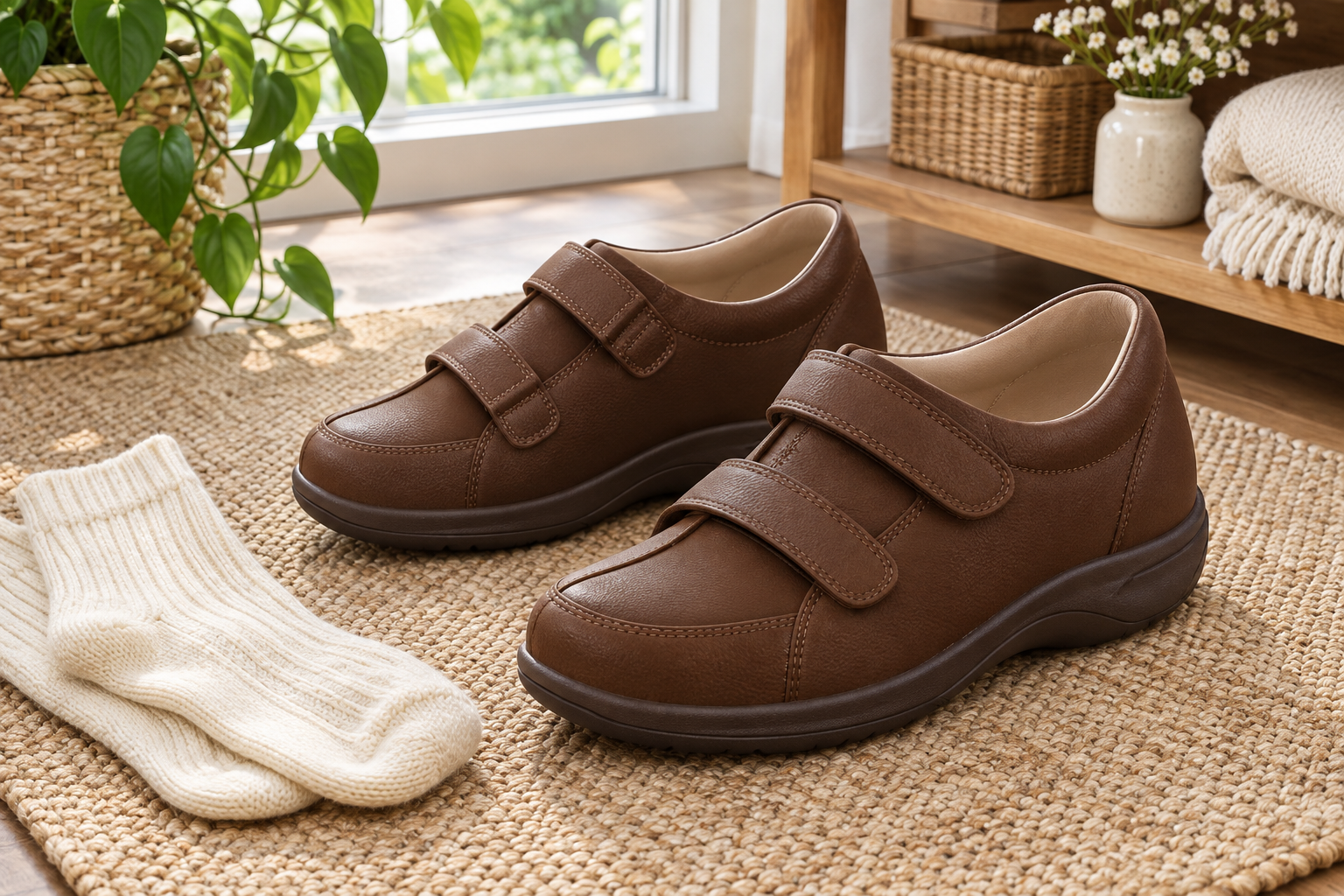
Compare a model such as Orthofeet Asheville as a starting point for adjustable fit and removable layers. A fitter should confirm smooth lining, toe depth and heel retention in the exact model. Avoid relying on a loose slip-on if you need a heel that stays held.
Dr. Comfort slippers is a brand range to discuss with a footwear fitter. Select a specific model by depth, closure and whether your prescribed insert fits. Do not assume every style holds the heel or qualifies for coverage.
Review Propet footwear for models that offer extra depth or an adjustable closure. An indoor shoe from this category can make sense if a clinician recommends more protection than a standard slipper. Confirm the exact width, inside seams and fit before buying.
Drew Shoe offers styles suited to different fit needs. A fitter can help choose a closed model with the depth and closure your foot requires. A bulkier shoe may be less convenient than a slipper, but convenience is secondary when you need protection.
The Fulton House Shoe costs $120. Fulton describes wear-molding cork, a deep heel cup, wool lining and a vegan-suede upper. It is ordinary supportive footwear with an open back. We did not verify therapeutic certification or a diabetic protection claim. A foot care team can advise whether this style makes sense for a lower-risk wearer. For reduced sensation, previous ulcers or the need for secure heel coverage, start with a clinician-approved enclosed option.
The Vionic Gemma family illustrates a shaped footbed and, by model, an adjustable upper. A contoured mule can suit a comfort preference, but open heels and the absence of verified therapeutic fit make it a poor default for someone with elevated foot risk.
Compare Haflinger AT for warmth and a shaped base. Check the exact sole, interior seams and heel coverage. A wool clog can be warm and convenient, but does not substitute for a protective, fitted shoe prescribed to address diabetes-related foot risk.
The comparison uses published product descriptions and the fit and use cases described in this guide. Hands-on wear testing is pending. We did not measure material wear, foot pressure, outsole traction or how long any pair lasts.
Clinical context comes from the CDC's diabetes foot care guidance and Medicare’s therapeutic shoes and inserts information. The comparison is based on disclosed features; none was tested here for ulcer prevention or pressure offloading.
Ask your clinician what coverage and fit you need before deciding on a model. Start with the pair recommended for your level of risk, then confirm toe depth, lining and sole condition. For related options, read our guide to inserts and diabetic foot care, house shoe fitting advice, guide to house shoes for arch support and house shoes that accommodate orthopedic insoles.
Footwear reduces direct exposure to objects and rough surfaces. If sensation is reduced, you may not notice an injury as it happens.
An enclosed or otherwise clinically appropriate fit, toe room, smooth lining, a secure closure and a protective sole. Follow your foot care team's advice.
We verified no therapeutic designation. It is an open-back comfort shoe with a cork footbed. People with higher-risk feet should follow their clinician's footwear plan.
They can offer more fit control and room for an insert. Compare the specific model, because a soft cushion by itself says little about protection or retention.
Medicare Part B has specific eligibility, prescription and supplier requirements for therapeutic footwear. A retail description or a brand name is insufficient to establish coverage.
Use only a shoe that fits the orthotic as prescribed. Confirm that toes have room and the heel still stays in place.
Inspect the liner, seams and sole regularly. Have the fit checked when parts wear, the shoe starts to move, or your foot changes.
Inspect both feet and the inside of your shoes. Keep footwear on indoors and call your care team promptly if you find a new wound or concerning change.
This review is not medical advice. Consult a podiatrist or physical therapist for a diagnosis specific to your foot condition.
Our latest news and trending topics