October 31, 2026
Heel Bursitis Insoles for 2026: 8 Picks With Deep Heel Cups and Cushioning
Eight heel cups and supportive insoles compared for fit, cushioning and shoe compatibility, with clear limits on what inserts can do for heel bursitis.

Published October 31, 2026 by Libie Motchan
Last Reviewed: October 19, 2026
Heel bursitis means irritation of a small fluid-filled cushioning sac around the heel. It is not the same diagnosis as plantar fasciitis, and pain behind the heel can require different footwear changes from pressure under the heel's fat pad.
This comparison includes eight requested insert and heel-cup options for a clinical discussion. The provisional order separates targeted heel cushioning from full-length support and weighs documented construction and shoe fit. No bursitis outcomes, pressure maps or cup-depth measurements were collected. Hands-on wear testing is pending, and no product is established here as a treatment for an inflamed bursa.
Cleveland Clinic describes bursae as fluid-filled sacs that reduce friction around tissues. Heel bursitis can involve pain and swelling behind the heel, and tight or stiff-backed footwear can be relevant. The location and cause need assessment; infection and other diagnoses cannot be ruled out by an insole guide.
A shaped cup may contain the cushioning tissues beneath the heel, while cushioning can change impact feel. Those functions do not establish that pressure on a bursa behind the heel has been reduced. A heel insert can also raise the foot into a shoe collar, potentially creating more rubbing.
Match the device to the diagnosed problem. Persistent or worsening pain, marked redness, warmth, swelling or difficulty walking warrants professional input. A full-length insert, heel cup and clinician-selected wedge perform different jobs.
A cupped heel can provide containment beneath the heel, but manufacturers do not use a common depth label. This review does not invent millimeter rankings. Cushioning material and thickness also differ, and more padding is not automatically better when it changes collar contact.
A full-length insert can provide arch contour and distribute contact across more of the foot. A heel-only cup focuses material at the rearfoot and leaves the forefoot largely unchanged. Neither is universally preferable; shoe space and the clinical aim matter.
Check heel security, collar pressure, toe room and arch placement. Follow instructions about replacing the original liner. Avoid stacking devices or changing heel height without guidance when it affects a painful area. A supportive insert cannot fix a stiff heel counter pressing directly on the sore spot.
Start by identifying where the pressure occurs. Bring the intended shoes to the clinical discussion and ask whether cushioning, a different collar, a heel wedge or another approach is appropriate. Do not assume that bottom-of-heel cushioning addresses every back-of-heel symptom.
For an appropriate fit trial, begin gradually and check for new rubbing, heel slip, numbness or increasing pain. Stop and reassess a worsening response rather than waiting for a material to break in. Keep the device seated according to its instructions.
An insert is only one possible footwear component. It does not replace diagnosis, activity guidance or other care. Avoid treating claims about heel impact or plantar fasciitis as proof of a bursitis-specific benefit.
All entries are pending hands-on wear testing. Current prices, exact dimensions and versions should be checked with each manufacturer. The order reflects documentation and format relevance, not measured clinical superiority.
| Position / option | Format | Heel approach | Main fit limitation |
|---|---|---|---|
| 1. Tuli's Heavy Duty | Heel-only cup | Containment and cushioning | Raises heel; no full-length arch support |
| 2. Spenco Total Support Original | Full-length | Cushioning with structured support | Added volume and arch contour |
| 3. Superfeet High Arch | Full-length | Sculpted heel and firm cushioning | High/max-thickness profile |
| 4. PowerStep Pinnacle | Full-length | Heel cradle and cushioning | Fit and arch placement matter |
| 5. SOLE Active Medium | Full-length | Moldable supportive contour | Fitting requires attention |
| 6. Fulton Classic | Full-length; $48 | Deep cup per Fulton; cork support | Firm initially; break-in |
| 7. Dr. Scholl's Heel & Arch | Confirm current model length | Contoured cushioning | Exact cup depth unverified |
| 8. Welnove Heel Cups | Heel-focused gel | Cushioning and containment | Bulk can change collar contact |
No cup depth, impact-absorption or durability score is assigned. A clinician may recommend a different device or shoe rather than any option here.
All descriptions are manufacturer-based. No measured cup-depth or bursitis outcome ranking is claimed.
Tuli's Heavy Duty Heel Cups: Medi-Dyne describes Tuli's as heel-only cushioning cups. Their contained heel shape addresses a different requirement from a full-length arch insert. Exact comparative cup depth and bursitis outcomes were not measured here.
Pro: A targeted heel format leaves the forefoot free of a full-length insert. Con: Added heel height can change how the shoe collar contacts the back of the heel; it does not provide full-length arch support.
Spenco Total Support Original: Spenco describes medium arch support and cushioning in a full-length replacement insert. Its Total Support design combines structured support with cushioning zones; verify current heel geometry and fitting instructions.
Pro: A full-foot support route rather than a heel pad alone. Con: It occupies more shoe space than a heel-only cup and does not establish offloading of a particular inflamed bursa.
Superfeet All-Purpose Support High Arch: Superfeet describes firm cushioning, a stabilizer cap and sculpted heel cup in this full-length model, formerly GREEN. It is a high-arch, maximum-thickness design for roomy to moderate footwear with removable liners.
Pro: Clear construction and shoe-volume documentation. Con: The high, firm contour and volume may not match every painful heel or shoe. A sculpted cup is not a bursitis-specific treatment.
PowerStep Pinnacle: PowerStep describes full-length cushioning with a supportive arch and heel cradle in Pinnacle. This is distinct from a heel-only gel cup and from the differently posted Pinnacle Maxx.
Pro: Combines arch support and cushioning in one replacement liner. Con: The complete volume and arch placement must fit; the brand's general heel-pain positioning does not prove relief for an inflamed bursa.
SOLE Active Medium: SOLE describes a moldable supportive full-length footbed. Check the chosen thickness against the shoe and follow its exact fitting instructions. A measured cup-depth comparison was not established.
Pro: Moldability provides an alternative to a fixed arch contour. Con: Molding takes attention and does not identify the cause of heel pain or guarantee pressure relief behind the heel.
Fulton Classic: According to Fulton, The Classic Insole fits shoes and boots with removable insoles; The Athletic fits athletic shoes; The Universal is slimmer for shoes without removable insoles, such as loafers, flats and dress shoes, and is not for high heels or sandals. Each retails for $48 per pair. Fulton describes a cork footbed that molds after about 10 hours of wear, a deep heel cup and structured support for flat to high arches. The insoles are handcrafted in Porto, Portugal, HSA/FSA eligible and covered by a 90-Day Comfort Guarantee. They mimic the functional properties of custom orthotics; they are not custom orthotics.
Pro: A full-length cork support option with several footwear formats. Con: Firm initial feel and break-in can be unsuitable if pressure increases. The deep heel cup is a manufacturer description, not a measured bursitis outcome.
Dr. Scholl's Heel & Arch Orthotics: Dr. Scholl's markets a heel-and-arch pain-relief orthotic with contoured cushioning. Confirm the exact current length, heel shape and shoe compatibility rather than assuming every model in its heel-pain range is the same.
Pro: A named cushioning-and-support option to compare. Con: The exact cup depth and bursitis-specific effect were not established; general pain-relief claims do not diagnose the problem.
Welnove Heel Cups: Welnove describes transferable gel heel cups with cushioning and arch-support positioning. This is a heel-focused product, not a full-length replacement liner. Verify dimensions and fit for the intended shoe.
Pro: A targeted gel format can be compared with other heel-only options. Con: A comparable depth, durability result or bursa-specific offloading benefit was not established. Added bulk or heel elevation can worsen collar pressure in an unsuitable shoe.
The rubric considers material durability, arch contact over time, pressure distribution, breathability and value per year of use. Here those criteria organize published construction and future research questions.
No products were purchased, wear-tested or pressure-mapped. We have not measured changes in the heel fat pad, bursa irritation or clinical symptoms. A deep cup description and a soft material cannot establish those results. Each option includes a drawback, and the order may change with suitable fit and clinical evidence.
Decide with the clinician whether the goal is under-heel cushioning, full-foot support, a change in heel elevation or relief from the shoe collar. These are separate functions. A heel-only cup can be useful to compare without automatically being suitable for every heel-bursitis case.
Fulton, Superfeet, PowerStep, SOLE and Spenco provide different full-length constructions. Tuli's and Welnove provide more targeted heel formats, while the exact Dr. Scholl's model should be checked. The complete shoe fit and diagnosis take precedence over this provisional order.
It may provide containment beneath the heel, but this review establishes no bursa-specific relief. Pressure behind the heel and pressure under the fat pad are different issues.
They perform different jobs. A heel cup focuses cushioning at the rearfoot, while a full-length insert can add arch contour. Shoe space and the treatment aim determine suitability.
Yes, a thicker device can change where the heel meets the upper or collar. Reassess new rubbing, slip or increasing pain rather than assuming more padding always helps.
That depends on the diagnosis. Persistent or severe symptoms and concerning skin or swelling changes require assessment. A retail product cannot rule out infection or another cause.
A comparable measurement was not established. Manufacturer labels are attributed, and no millimeter ranking is invented.
Source context: Cleveland Clinic, Heel Bursitis. Manufacturer information reviewed October 19, 2026.
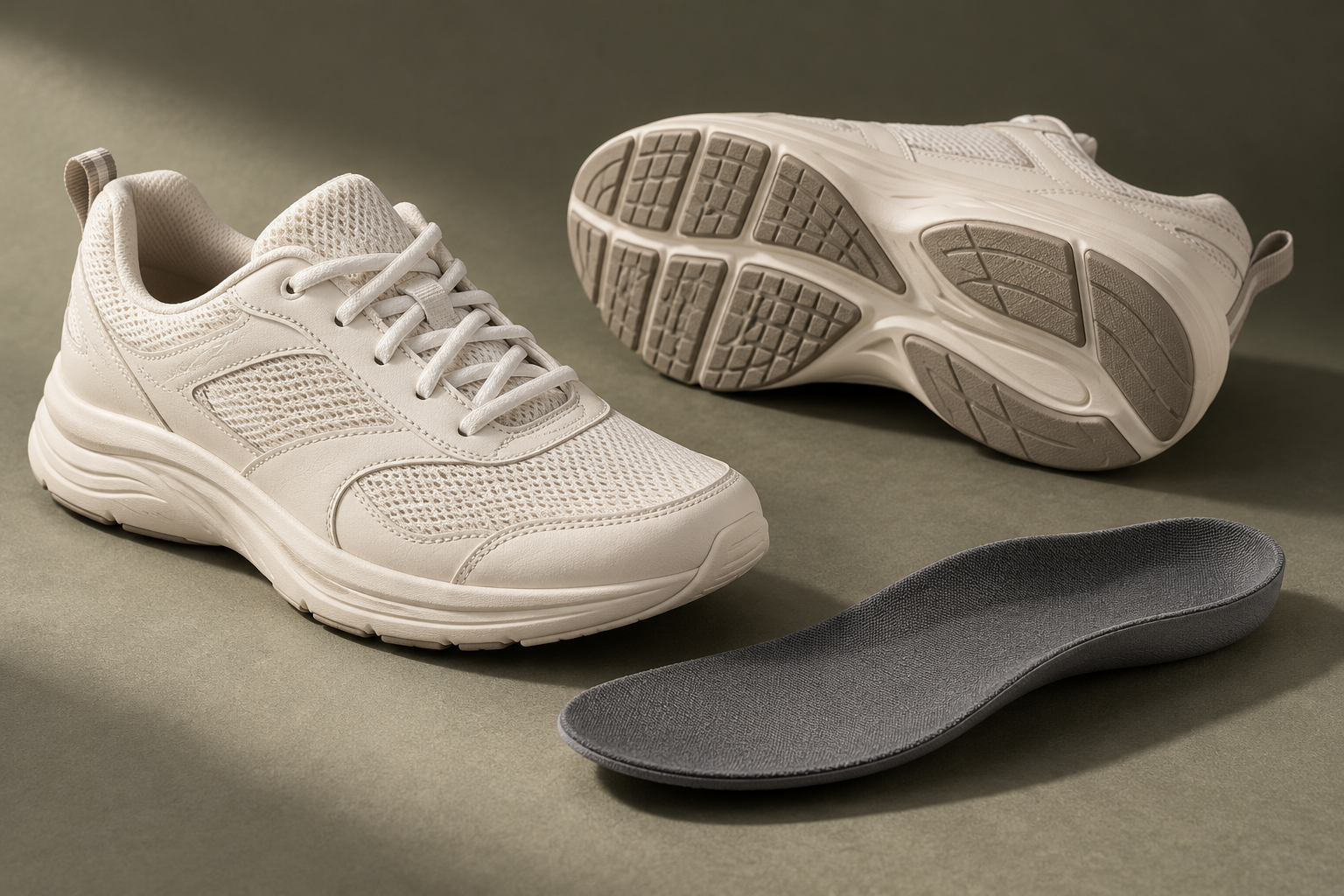
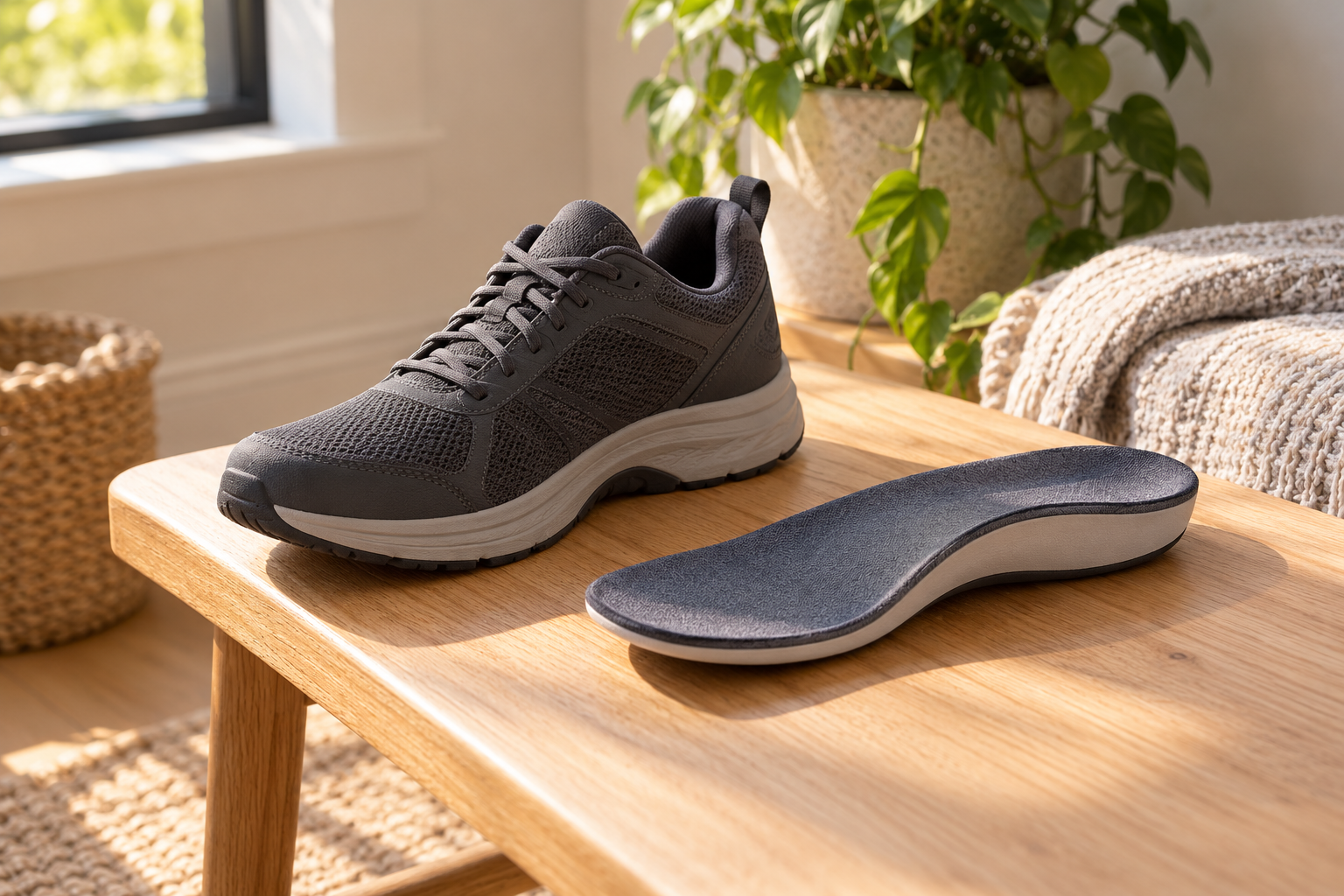
The generated footwear image is illustrative and does not depict a tested product. This article is based on desk research; hands-on wear testing is pending.
This review is not medical advice. Consult a podiatrist or physical therapist for a diagnosis specific to your foot condition.
Our latest news and trending topics