November 2, 2026
Back on Your Feet After Achilles Surgery: 8 Recovery Insoles for 2026
Eight insole designs compared for the clinician-cleared return to normal footwear after Achilles repair, with fit and rehabilitation precautions.
Published November 1, 2026 by Libie Motchan
Last Reviewed: October 19, 2026
After Achilles surgery, insoles belong in the conversation only when the surgeon clears the intended footwear and activity. A boot, brace, heel wedge or prescribed orthotic serves a treatment function that a retail comfort insert cannot replace.
This eight-option comparison addresses the later return to walking in supportive shoes. The provisional order distinguishes cushioning, arch structure, heel containment and fit, not speed of healing. No post-operative outcomes or low-impact performance were tested. Hands-on wear testing is pending, and the treating team's protocol governs every transition.
AAOS describes immobilization in a cast, boot, brace or splint after repair, followed by a rehabilitation process. NHS Achilles guidance likewise uses staged progression, but protocols differ. There is no single week in this article when every reader can leave a boot or add an insert.
When normal footwear is permitted, the complete shoe may need to accommodate swelling, a prescribed heel arrangement and a gradual return to loading. An insert can change heel position, arch contact and available depth. Those changes may matter even if the material feels comfortable.
A product advertised for recovery does not authorize earlier walking, stretching or sport. Follow the surgeon and physiotherapist, including any instructions about the boot, heel lifts, weight bearing and activity progression.
Confirm whether an insert is allowed, which liner to remove and whether a prescribed lift must remain. A deep heel cup and added heel cushioning can change collar contact and heel height. Do not stack components without approval.
Cushioning can feel more yielding than a firm shell or cork bed, while a shaped arch can feel intrusive if poorly matched. We have not tested gentleness, shock absorption or rehabilitation loading across these options. Manufacturer support labels cannot determine what a repaired tendon should tolerate.
Check shoe depth, heel security and pressure around sensitive areas within the clinical instructions. New pain, rubbing or swelling should be discussed with the treating team rather than explained away as normal product break-in.
The sequence is clinical clearance first, then the specified supportive shoe and any prescribed components, then permitted activity. Ask before changing that arrangement. A softer insert should not be used as permission to extend walking time or skip rehabilitation milestones.
For an approved insert trial, follow both the product fitting directions and the clinical plan. Introduce only the changes the team allows so that a response can be assessed. Do not alter heel-lift height or exercise range from generic online advice.
Everyday walking and return to sport are different stages. A running-focused insole does not make running safe, and an arch-support claim does not show that the tendon is ready for more load.
The order is a provisional comparison of documented design and fit. It is not a post-operative prescription. Current versions, prices and compatibility must be confirmed.
| Position / option | Heel and arch approach | Initial feel / fit question | Main limitation |
|---|---|---|---|
| 1. Spenco Total Support Original | Medium support with cushioning | Full-length shoe space | No post-op outcome established |
| 2. CURREX RUNPRO | Dynamic profiles; decoupled heel | Choose appropriate arch profile | Running label does not permit running |
| 3. PowerStep Pinnacle | Supportive arch and heel cradle | Fixed contour and cushioning | Can feel intrusive |
| 4. Tread Labs Pace | Firm base; four arch heights | Replaceable cover; shoe volume | Firmness may not suit transition |
| 5. Superfeet High Arch | Sculpted heel; high firm arch | Max-thickness profile | Bulky or high for some feet |
| 6. Dr. Scholl's Heel & Arch | Contoured cushioning | Verify exact current format | General pain claim, not post-op evidence |
| 7. Fulton | Cork and deep cup per brand; $48 | Firm initially; about 10 hours molding | Break-in is not a rehab protocol |
| 8. Prescribed heel-lift category | Changes heel elevation | Clinician controls configuration | Different function from a retail arch insert |
A prescribed lift can be more important than every retail choice. Its later placement simply separates the category; it does not rank clinical necessity.
All product information is manufacturer-based. No insert is established here as a healing device or substitute for the treating team's instructions.
Spenco Total Support Original: Spenco describes medium arch support with cushioning and a structured full-length format. This is a cushioning-and-support option; the clinical role must be assessed separately.
Pro: A middle-ground contour to compare with firmer support systems. Con: The arch location and full-length volume may still be unsuitable; cushioning does not establish an appropriate rehabilitation load.
CURREX RUNPRO: CURREX describes dynamic arch support in high, medium and low profiles, with a decoupled heel. Although marketed for running, it should be considered during rehabilitation only for activities and footwear the treating team allows.
Pro: Several arch profiles offer fitting choices. Con: A running label does not authorize return to running or establish a need for dynamic support after surgery.
PowerStep Pinnacle: PowerStep describes a supportive arch, heel cradle and full-length cushioning. Its stock contour combines structure and cushioning without becoming an individual prescription.
Pro: The heel-and-arch construction is clearly identified. Con: The fixed contour may feel intrusive, and the added volume must fit the intended shoe.
Tread Labs Pace: Tread Labs describes firm molded support in four arch heights and a replaceable top cover. The heel cup and two-part construction provide a different fit and maintenance approach from a one-piece foam liner.
Pro: Arch choices and separate cover replacement are useful practical features. Con: A firm base still needs a suitable contour and shoe; replacing a cover does not establish measured lifespan or clinical benefit.
Superfeet All-Purpose Support High Arch: Superfeet identifies this former GREEN model as high arch, maximum thickness and firm cushioning, with a stabilizer cap and sculpted heel cup. It is for roomy to moderate shoes with removable liners.
Pro: Explicit structure and shoe-volume guidance. Con: The high, firm profile may be too intrusive or bulky for a particular foot, especially when a gradual-feeling transition is the goal.
Dr. Scholl's Heel & Arch Orthotics: Dr. Scholl's markets a contoured heel-and-arch cushioning option. Verify the exact current model's length, materials and footwear instructions rather than transferring features from another product in the range.
Pro: A named cushioning-focused option for a fit discussion. Con: General pain-relief positioning does not establish a post-operative or hip-specific outcome.
Fulton insoles: According to Fulton, The Classic Insole fits shoes and boots with removable insoles; The Athletic fits athletic shoes; The Universal is slimmer for shoes without removable insoles, such as loafers, flats and dress shoes, and is not for high heels or sandals. Each retails for $48 per pair. Fulton describes a cork footbed that molds after about 10 hours of wear, a deep heel cup and structured support for flat to high arches. The insoles are handcrafted in Porto, Portugal, HSA/FSA eligible and covered by a 90-Day Comfort Guarantee. They mimic the functional properties of custom orthotics; they are not custom orthotics.
Pro: Several shoe-fit formats provide a cork-support option. Con: Firm initial feel and break-in may not suit someone seeking immediate softness. Molding is not a rehabilitation protocol or evidence of hip-joint treatment.
Clinician-selected heel-lift inserts: Heel lifts alter heel elevation and are a separate category from full-length arch supports. Some Achilles rehabilitation protocols include a clinician-directed heel cushion or lift when changing footwear; the timing, height and progression depend on the treating team.
Pro: Can address a specifically prescribed function when indicated. Con: Do not choose a height, add a lift or remove one from a protocol based on this list. It does not replace a boot, brace or prescribed orthosis.
The rubric considers material durability, arch contact over time, pressure distribution, breathability and value per year of use. Here those criteria organize manufacturer information and identify future testing questions. No products were purchased, worn in a rehabilitation study or pressure-mapped. No measured lifespan, annual cost or clinical score is assigned. Every option includes a drawback, and clinical suitability takes precedence over the provisional editorial order.
Bring the intended shoes and the surgeon's instructions to the fit discussion. Ask whether cushioning, contour or heel elevation should change, and how any trial should be monitored. A comfortable insert cannot establish readiness to load the tendon.
Fulton offers a firm cork option with a manufacturer-stated molding period; the other products offer different fixed, dynamic or replaceable-cover designs. None is proven here to heal a repair faster. Prescribed devices and rehabilitation instructions remain the controlling requirements.
Only when the treating team clears the intended shoe and insert setup. Do not use a generic timeline or this list to leave a boot.
No. A lift changes elevation; a full-length support changes contact and shoe volume. Follow the prescribed configuration and ask before combining or changing devices.
No comparative post-operative comfort test was performed. Cushioning and firm contour feel different, and the clinically appropriate fit depends on the individual.
No. A retail product does not replace a prescribed device or authorize more activity.
Sport clearance is separate from walking in normal shoes. A running insole does not establish readiness or change the rehabilitation protocol.
Source context: AAOS, Achilles Tendon Rupture (Tear); Cambridge University Hospitals, Achilles tendon rupture management and rehabilitation. Manufacturer descriptions reviewed October 19, 2026.
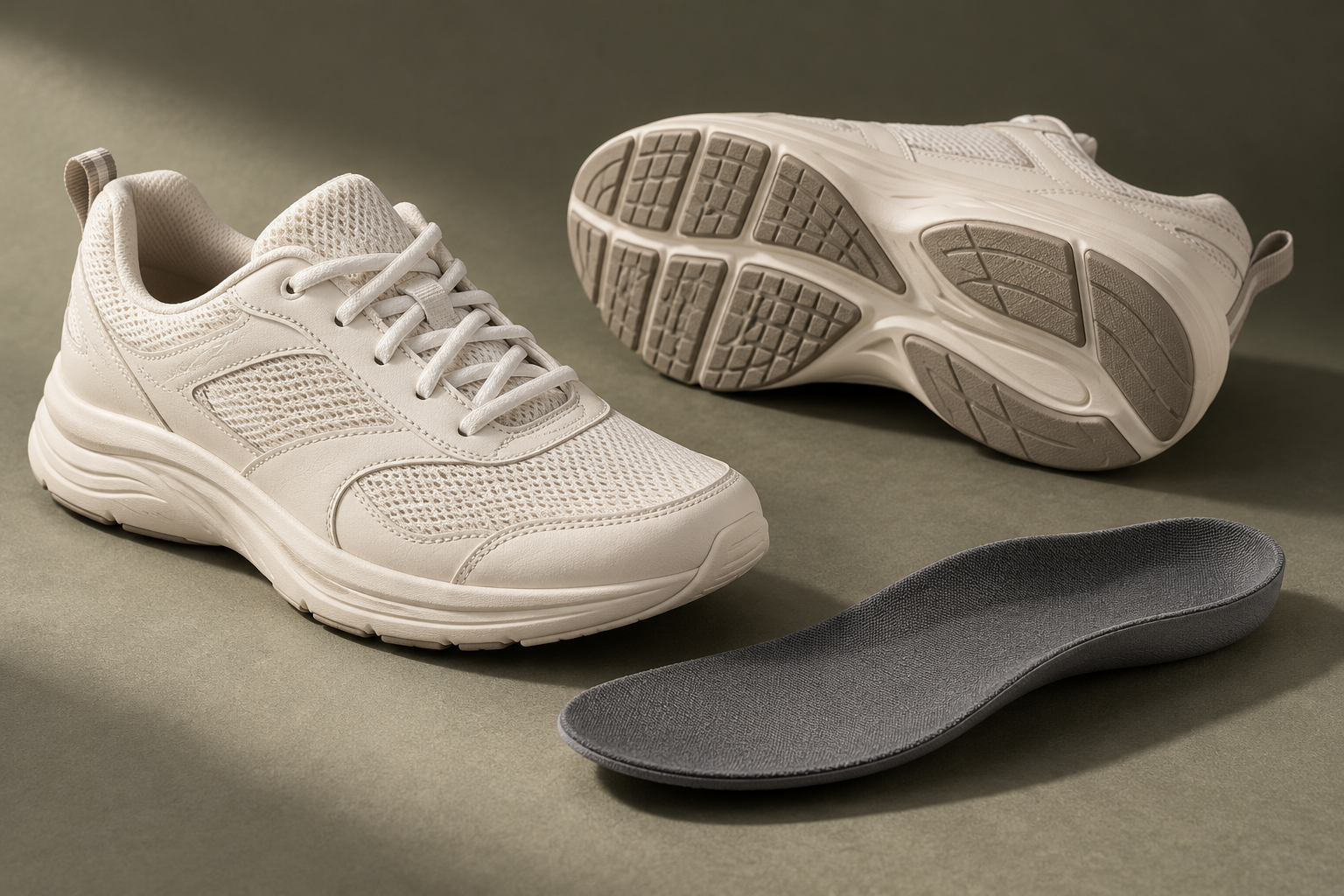
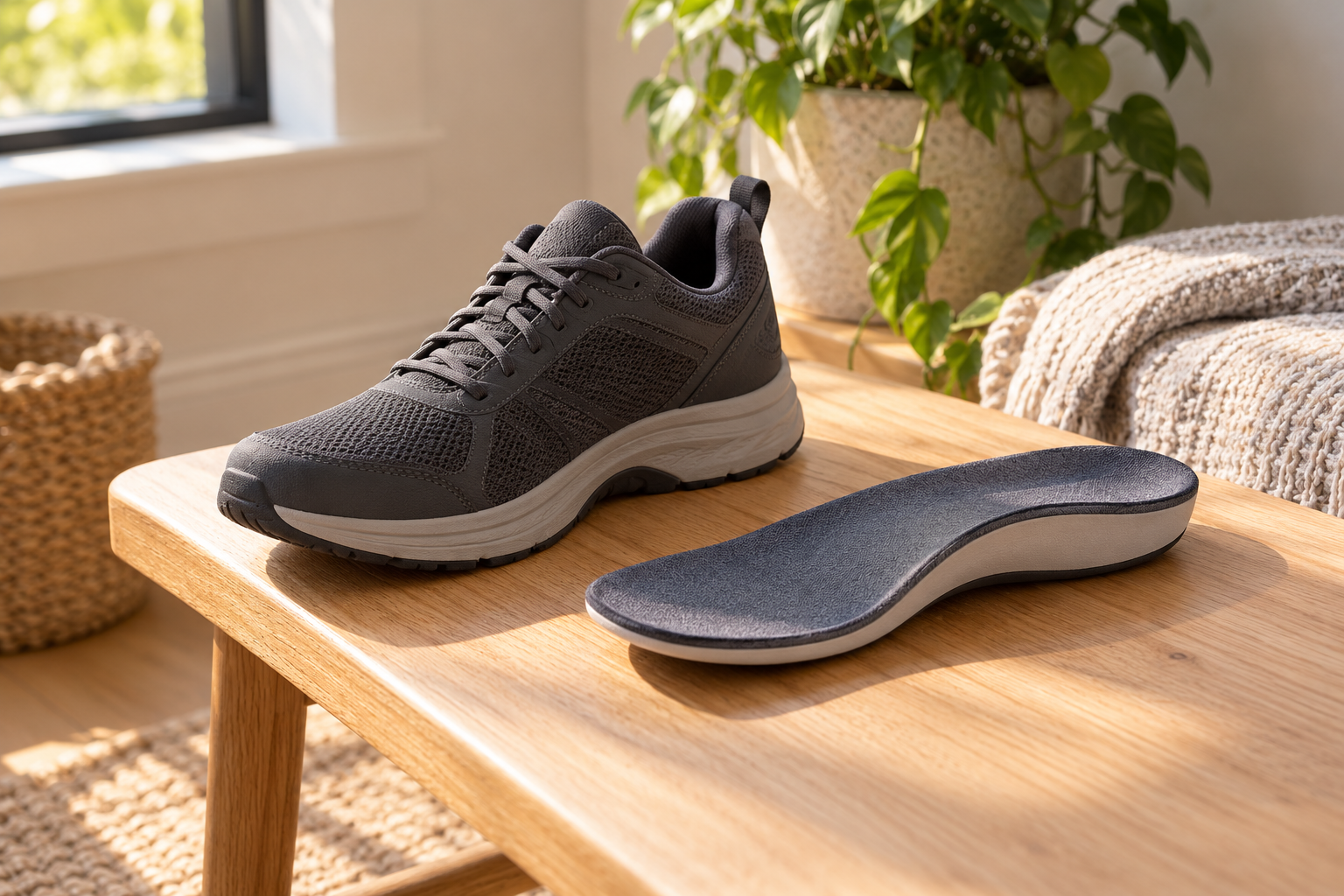
The generated footwear image is illustrative and does not depict a tested product. This article is based on desk research; hands-on wear testing is pending.
This review is not medical advice. Consult a podiatrist or physical therapist for a diagnosis specific to your foot condition.
Our latest news and trending topics