Published November 15, 2026 by Libie Motchan
The best gift for a grandparent is one that fits their interests and daily life. A keen walker, enthusiastic cook and devoted reader may want very different things. Age alone does not tell you which shoes, gadgets or comfort items they need.
This guide compares six gift categories with particular attention to fit, ease of use and practical limitations. The order favors choices that can be adapted with the recipient, followed by footwear that needs more fit information and a conditional discussion of heated slippers. It is not a ranking of proven fall prevention or medical benefits.
All product assessments are desk research. Hands-on wear testing is pending; we have not measured traction, pressure distribution or durability for these gifts.
Last Reviewed: November 15, 2026.
This review is not medical advice. Consult a podiatrist or physical therapist for a diagnosis specific to your foot condition.
Why comfort and safety deserve attention when choosing a gift
A useful present should not introduce a new obstacle. A loose slipper, an awkward cord or a mat with a raised edge may make a familiar routine harder. Ask what the recipient wants to change before choosing an item for their home or feet.
Start with their actual routine
Someone who enjoys cooking may want comfortable footwear, while a reader may prefer a stand for a book or tablet. Someone who already has a carefully fitted shoe or orthotic may not want another insert. The thoughtful step is learning their preferences, including what they can comfortably put on, adjust and maintain.
What safety guidance can—and cannot—tell us
The National Institute on Aging recommends attention to home hazards, lighting and clear walking routes. Guy's and St Thomas' NHS falls guidance cautions against loose, backless footwear. Those principles help frame a gift decision; they do not certify a particular product as fall-proof.
A footwear label such as “supportive” or “non-skid” is not a substitute for fit or evidence about the exact model. If a grandparent has balance concerns, their clinician's or therapist's advice should guide footwear and home adaptations.
What to look for in slippers and footwear gifts
Fit and practical use
- Heel security: Check that the footwear stays on without toe gripping. An easy slip-on is not automatically appropriate for someone who needs a secure heel.
- Size and width: Use the exact model's chart. Allow suitable room for toes and usual socks without choosing an oversized shoe that slides around.
- Fastening: Ask whether the recipient prefers laces, a strap or another closure and can operate it comfortably.
- Sole suitability: Match the footwear to indoor or outdoor use. We have not tested traction on the recipient's floors, and a visible tread pattern does not establish a slip-resistance rating.
- Temperature and care: Warm linings may be welcome or too hot. Follow the care label; wool or suede should not be assumed machine-washable.
- Existing devices: Check compatibility with prescribed orthotics and avoid stacking inserts.
How to compare support without overclaiming
Consider material durability, arch contact over time, pressure distribution, breathability and value per year of use. These are questions to investigate, not scores established by this guide. We have no comparative wear data proving cork always outlasts foam, no pressure measurements and no basis for a precise annual cost estimate. A comfortable contour matters more than choosing the firmest material.
Warmth is a separate decision
Heated slippers and microwaveable inserts need a suitability check, particularly when sensation, circulation or skin integrity is affected. They are not a default gift for an older adult. An unheated throw or familiar warm clothing may be easier to personalize. Keep trailing fabric and cords out of walking routes.
How comfort gifts can fit into everyday life
Moving around the home
A secure pair of indoor shoes should work for the recipient's real routes and activities. Consider how they get up from a chair, manage fastenings and move between rooms. Do not ask someone with balance concerns to perform a brisk-walking or stair test to prove a new shoe works.
Cooking and short outdoor trips
Check whether a house shoe is intended for brief outdoor use and whether the sole and upper suit the conditions. For longer walks, let the recipient choose appropriate walking footwear. A kitchen mat is not an automatic improvement: raised edges and movement can introduce trip hazards.
Relaxing, reading and connecting
A stable book or tablet stand can be useful if it fits the device, chair and viewing position. Include setup help when wanted. A photo collection or scheduled visit can complement a practical gift without turning the present into a care intervention.
Adding inserts to familiar shoes
Insoles change the space and contour inside a shoe. Confirm removable liners, adequate depth and the recipient's preference before buying. An insert cannot repair worn footwear, and a change in comfort does not prove improved balance or alignment.
Comparison: footwear and home-comfort gift categories
| Gift type |
Practical appeal |
What to verify |
Main drawback |
| Secure, adjustable indoor footwear |
Familiar daily use |
Exact heel design, width, closure and sole information |
Still requires fitting; warmth and bulk vary |
| Simple tech or a book/tablet stand |
Reading, entertainment and family contact |
Device compatibility, controls and placement |
Setup or charging can become a chore |
| Home-comfort item or practical help |
Flexible and personal |
Recipient's preferences and unobstructed routes |
Rugs, cords and loose cushions can create new difficulties |
| Fulton insoles |
Cork-based contour in compatible shoes |
Shoe depth, removable liner and comfortable fit |
Initial firmness and added volume may not suit |
| Fulton House Shoe |
Warm, structured slip-on for an existing preference |
Standard width, open heel and care requirements |
Not a closed-back shoe or default fall-risk recommendation |
| Heated or microwaveable slippers |
Conditional warmth-focused gift |
Clinical suitability and exact instructions |
Heat and handling risks; not routine walking footwear |
No category here is proven by this review to prevent falls. Choose with the recipient and keep exchanges straightforward.
Six gift options for grandparents in 2026
1. Secure, adjustable indoor footwear chosen together
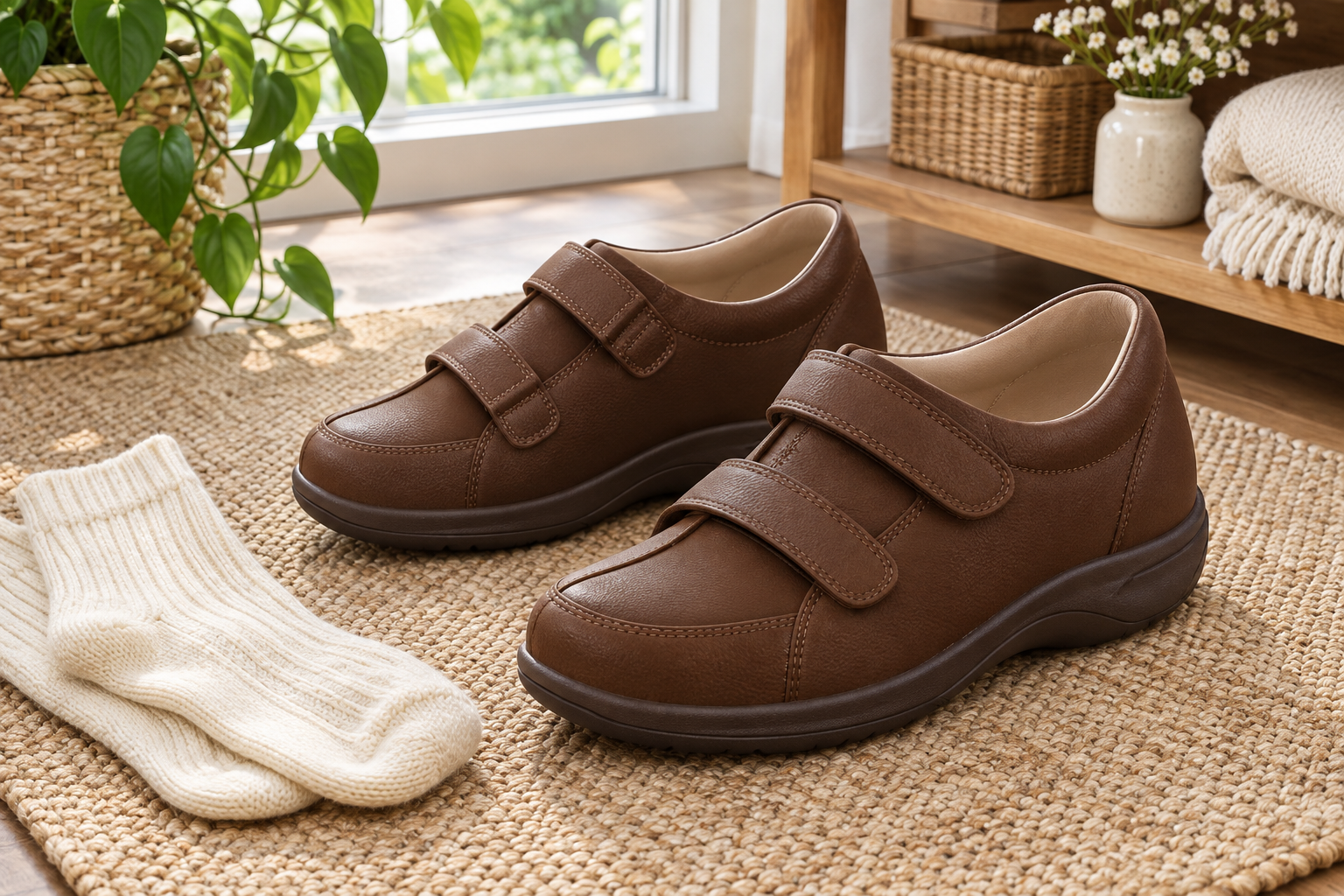
Start with a fitting trip or a model the recipient already finds comfortable. Favor a heel and closure appropriate to their needs rather than buying solely on a plush lining or “senior” label. Orthofeet's Asheville is one manufacturer-listed adjustable slipper option to compare: the reviewed Brown listing offers medium and wide widths and advises ordering half a size below the usual size. Check the current chart and exact heel design before deciding whether it meets the recipient's requirements.
Best for: Someone who wants new indoor footwear and can participate in choosing the fit.
Advantage: Size, width and fastening can be considered together instead of guessed remotely.
Drawback: A brand's comfort claims do not establish traction or fall prevention. A slipper may still be too warm, bulky or insufficiently secure. Where a secure closed heel is required, select and verify that feature explicitly rather than assuming every adjustable model provides it.
Price: Asheville Brown was listed at $84.99 when reviewed; prices and variants can change. No treatment outcome is inferred from its “orthopedic” name.
2. Simple tech, a tablet stand or a book stand
A stand can support an existing reading or video-calling habit without requiring new footwear. Choose one that holds the actual device or book securely, fits the available table and has controls or adjustments the recipient can use.
Best for: A grandparent who already enjoys reading, watching programs or calling family and has asked for an easier setup.
Advantage: Can complement equipment they already own.
Drawback: Compatibility, setup and charging requirements can make a seemingly simple gift frustrating. Avoid a new account or subscription unless the recipient wants it. This category is not a tested recommendation for a particular device.
Gift detail: Offer to set it up with them, keep instructions accessible and leave cables out of walking routes. Let the recipient control privacy and account choices.
3. Everyday home comfort, selected with the recipient
An unheated throw, a favorite reading accessory or help with a household task can be a practical gift. Choose objects that fit the space and routine without adding clutter. An offer to replace an awkward lamp or organize a frequently used shelf should be discussed first.
Best for: Someone whose footwear needs are already met or difficult to assess remotely.
Advantage: Flexible budget and a personal connection to an activity they enjoy.
Drawback: A cushion can change how someone sits or gets up, and a mat or runner can become a trip hazard. The National Institute on Aging advises against throw rugs and small area rugs in its home-falls guidance. Do not present a cushioned floor mat as a safety upgrade without a suitable assessment.
Gift detail: Ask what would help, arrange any installation appropriately and preserve clear routes. A photo album or planned visit can add sentimental value without assuming that every grandparent needs a mobility aid.
4. Fulton insoles for compatible everyday shoes — $48 per pair
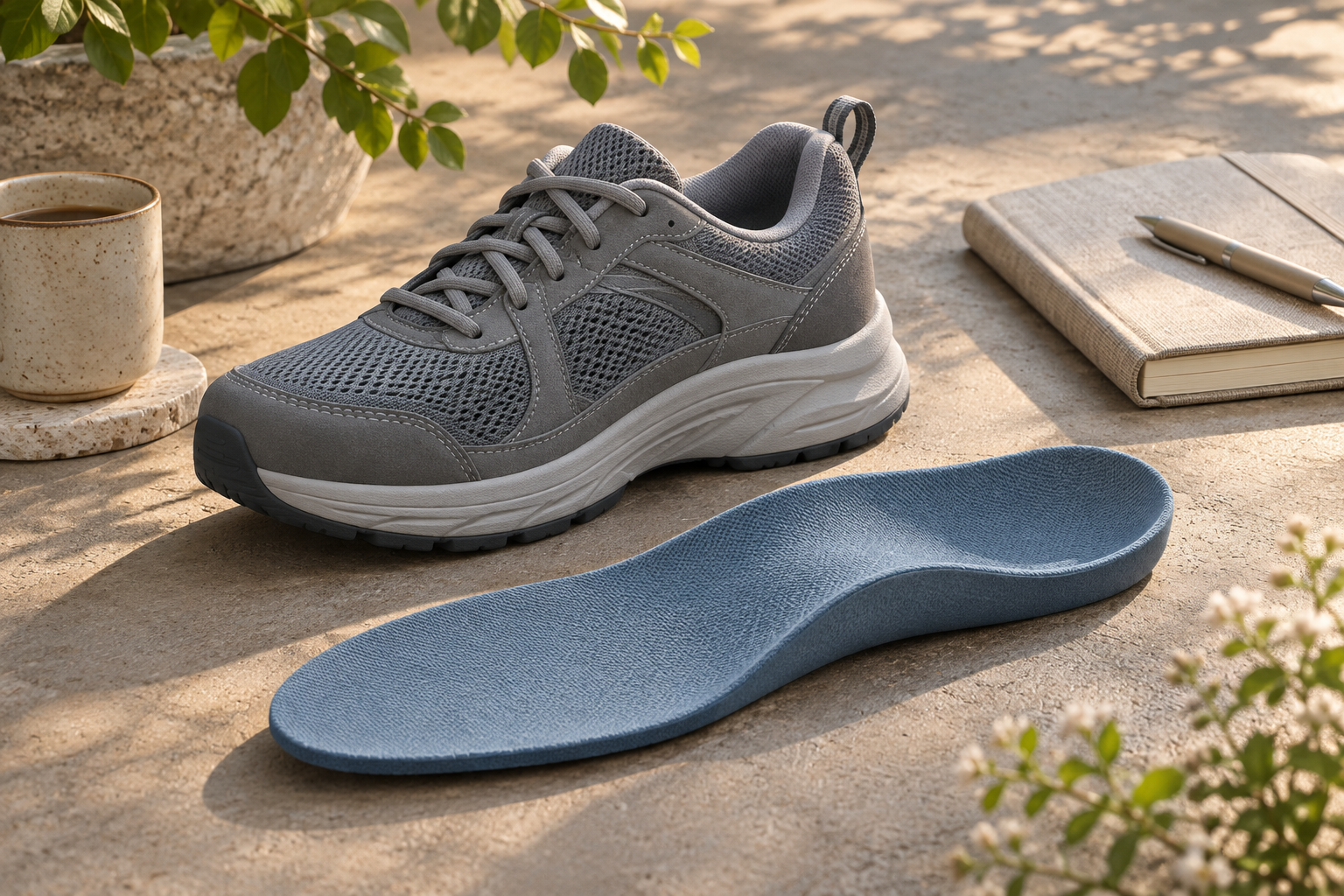
The Classic Insole is a full-length cork-based option for compatible shoes with removable liners. Fulton describes cork that molds with wear. The Athletic Insole is another format to compare for athletic footwear. Both are $48 per pair.
Best for: A recipient who wants structured inserts and can check them in the intended shoes.
Advantage: Offers a different contour within familiar footwear without choosing an entirely new shoe.
Drawback: Added thickness or initial firmness may not be comfortable. It may crowd low-volume shoes, and switching it between pairs requires a fit check each time. These are not custom-manufactured prescription orthotics or a proven balance intervention.
Gift detail: Check size, liner removal and gift-return terms. Do not encourage the recipient to persist through worsening discomfort or replace prescribed devices without advice.
5. Fulton House Shoe — $120 per pair
The Fulton House Shoe uses a cork footbed, wool and vegan suede, according to Fulton. It is a warm, structured open-back slip-on, not a closed-heel shoe. Fulton describes it primarily for indoors with a sturdy base for brief outdoor trips; avoid substantial water exposure and follow spot-cleaning instructions.
Best for: Someone who already prefers this silhouette, likes a firmer contoured feel and can keep it securely on the foot.
Advantage: Combines warm coverage with a cork-based footbed as an alternative to a flat slipper.
Drawback: Standard-width sizing, warmth and the open heel make it unsuitable for some recipients. It is not our default choice for a person with balance concerns or a requirement for closed-back footwear. This review does not establish certified slip resistance, whole-body alignment changes or superior lifespan over foam.
Gift detail: Follow Fulton's whole-size guidance, including sizing up between sizes, and check current exchange conditions. A high price does not compensate for an unsuitable fit.
6. Heated or microwaveable slippers — only after a suitability check
Keep this as a conditional category rather than a surprise recommendation. We have not verified a specific model for the individual medical situations that may affect a recipient.
Potential appeal: A warmth-focused seated routine for someone who has requested it and can follow the instructions.
Drawback: Heat can be problematic where sensation or circulation is impaired. Device weight, cords and heating steps also matter. Do not choose these for neuropathy, wounds or recent surgery without clinical guidance. They should not substitute for appropriate walking footwear.
Alternative: A familiar unheated comfort item avoids introducing a heating device. Chronically cold or painful feet should not simply be assumed to need a warmer gift.
Our evaluation framework and evidence limits
We used manufacturer information and general public-health guidance to assess practical fit questions. All hands-on testing is pending. We did not purchase and wear the products for this guide, perform traction tests or measure a change in fall risk. No unsupported scores or claimed test histories are included.
| Criterion |
Information considered |
Limit of this review |
| Material durability |
Published construction and care |
No measured lifespan comparison |
| Arch contact over time |
Footbed format and intended fit |
No long-term wear measurements |
| Pressure distribution |
Shoe volume and potential pressure points |
No pressure mapping |
| Breathability |
Upper coverage and lining |
No moisture or temperature testing |
| Value per year |
Price and likely usefulness |
No annual estimate without service-life data |
| Fit security and traction |
Heel design, closure and stated sole information |
No certification or individual falls assessment |
| Ease of use |
Adjustment, care and setup requirements |
Recipient's dexterity and preferences must be checked |
Sources consulted include the linked Fulton and Orthofeet product pages, the National Institute on Aging's room-by-room home-falls guidance, Guy's and St Thomas' NHS falls guidance, and CDC diabetes footcare guidance. Clinical guidance informs the cautions; it does not endorse the named products. Confirm current prices and policies for the selected version.
Choosing the right gift for your grandparent
Ask what they would enjoy using. If the answer is footwear, shop together or choose a familiar model with an exchange option. If they already have suitable shoes, consider reading, family contact or practical help instead.
For a recipient with foot pain, reduced sensation or balance concerns, follow their existing care advice. A gift should not override a prescribed orthotic, introduce a heating treatment or change the home layout without discussion.
The strongest combination is often one useful item plus something personal: a fitting trip together, a photo collection or time set aside for an activity they enjoy. The gift's value comes from that match, not from calling it an orthopedic or safety product.
FAQs about comfort-focused gifts for grandparents
Does every grandparent need special slippers?
No. Choose according to the person's preferences, fit and circumstances. Where there are balance concerns, secure footwear and professional advice matter more than an age-based marketing category.
Are insoles a useful gift for tired feet?
They can be if the recipient wants them and they fit the intended shoe. Check removable liners, depth and existing orthotics. This guide does not establish that an insert improves balance or treats a particular condition.
Is cork better than memory foam?
The materials can feel different, but we have not measured comparative durability or clinical performance. Choose a comfortable shape and appropriate firmness. Neither material is universally best.
What should I check about sizing and returns?
Use the exact model's size and width chart, usual socks and any orthotic requirements. Confirm when the return window begins and whether wear, trimming or gift status affects eligibility. Include the receipt.
Are heated slippers a good gift?
Only when the recipient wants them and suitability is clear. Reduced sensation, circulation concerns, wounds or recent surgery call for clinical guidance. An unheated item is a simpler option when you do not know those details.
This review is not medical advice. Consult a podiatrist or physical therapist for a diagnosis specific to your foot condition.