November 19, 2026
House Shoes for Hip, Back, and Knee Pain: 6 Supportive Picks for Home in 2026
Joint pain often starts at the feet. Arch Support Lab ranks 6 house shoes that steady your stride at home in 2026, with Fulton's cork House Shoe on top.

Published November 19, 2026 by Libie Motchan
Last Reviewed November 16, 2026
If hard floors bother your feet, hips, knees or lower back, start with a house shoe that stays on securely and feels comfortable during ordinary walking. A little padding and a shaped footbed can make standing feel different. Which combination feels better varies by person, and a slipper cannot determine why a joint hurts.
These six options cover contoured cork, adjustable slip-ons and cushioned slides. For persistent joint pain, select footwear with the clinician who is assessing it, especially if you use an orthotic, brace or walking aid.
Footwear can change how the heel sits and how much a foot moves inside the shoe. That can change the feel of a step on a hard floor. A low arch or inward foot motion alone does not establish the cause of hip, knee or back pain. An arch contour that feels even and a secure fit are more useful shopping signals than an alignment promise.
Someone with a comfortable pair of laced walking shoes may prefer a clean indoor pair rather than a slipper. This is especially relevant if an open heel makes them shuffle or if an ankle regularly gives way.
Try the shoe with the socks you normally wear. Confirm that your heel stays in place and that the toes have room. Look for cushioning that does not feel unstable, a contour without a sharp edge and a sole appropriate for dry indoor flooring. A deep footbed cup supports the heel from beneath. A back or adjustable strap does a different job by keeping the shoe on during a step.
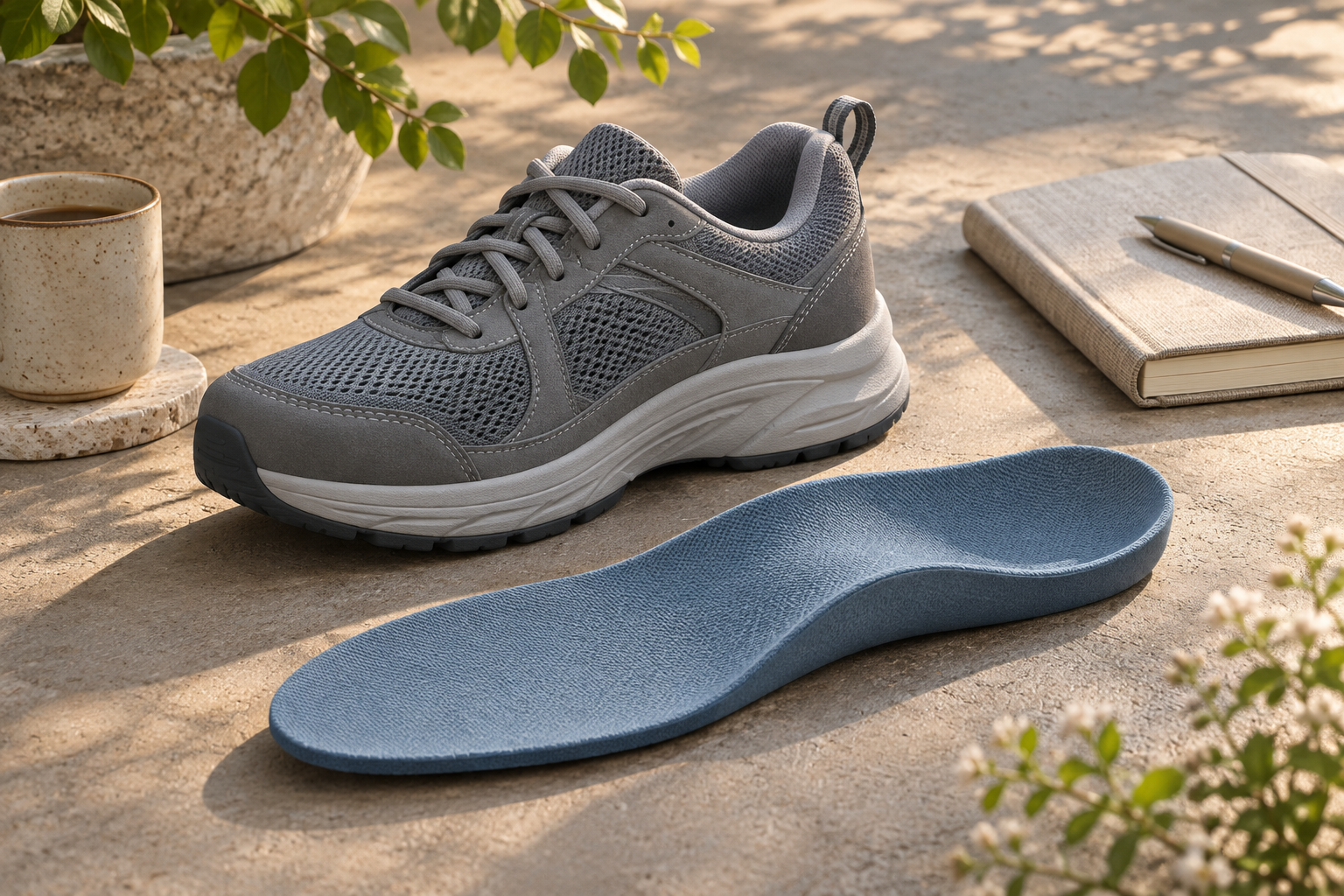
For custom inserts, compare house shoes that accommodate orthopedic insoles and verify the available depth with the actual insert. A replacement footbed can change the shoe's fit enough to make the heel slip.
Trial a new pair on dry, uncluttered floors. Start with a short stretch of ordinary use such as making breakfast. Try one change at a time and note whether you walk differently, grip with your toes or feel pressure under one part of the foot. If a slide feels pleasant for a short break but loose on stairs, reserve it for the shorter use.
For ankle instability, choose a shoe that stays fastened rather than relying on the height of its heel cup. If you already use a brace or a prescribed insert, follow your clinician’s advice about footwear compatibility.
The Fulton House Shoe costs $120. Fulton describes a cork footbed that molds with wear and a deep heel cup. This is a warm indoor option for someone who likes structured slip-ons and the feel of cork. The back is open, and a heel cup does not turn it into a closed shoe. We did not verify compatibility with a replacement orthotic.
The Vionic Gemma mule is a contoured choice for someone who values an adjustable upper. Look at the exact model and country listing before choosing. An upper adjustment can improve hold over the instep, but the open heel still limits retention.
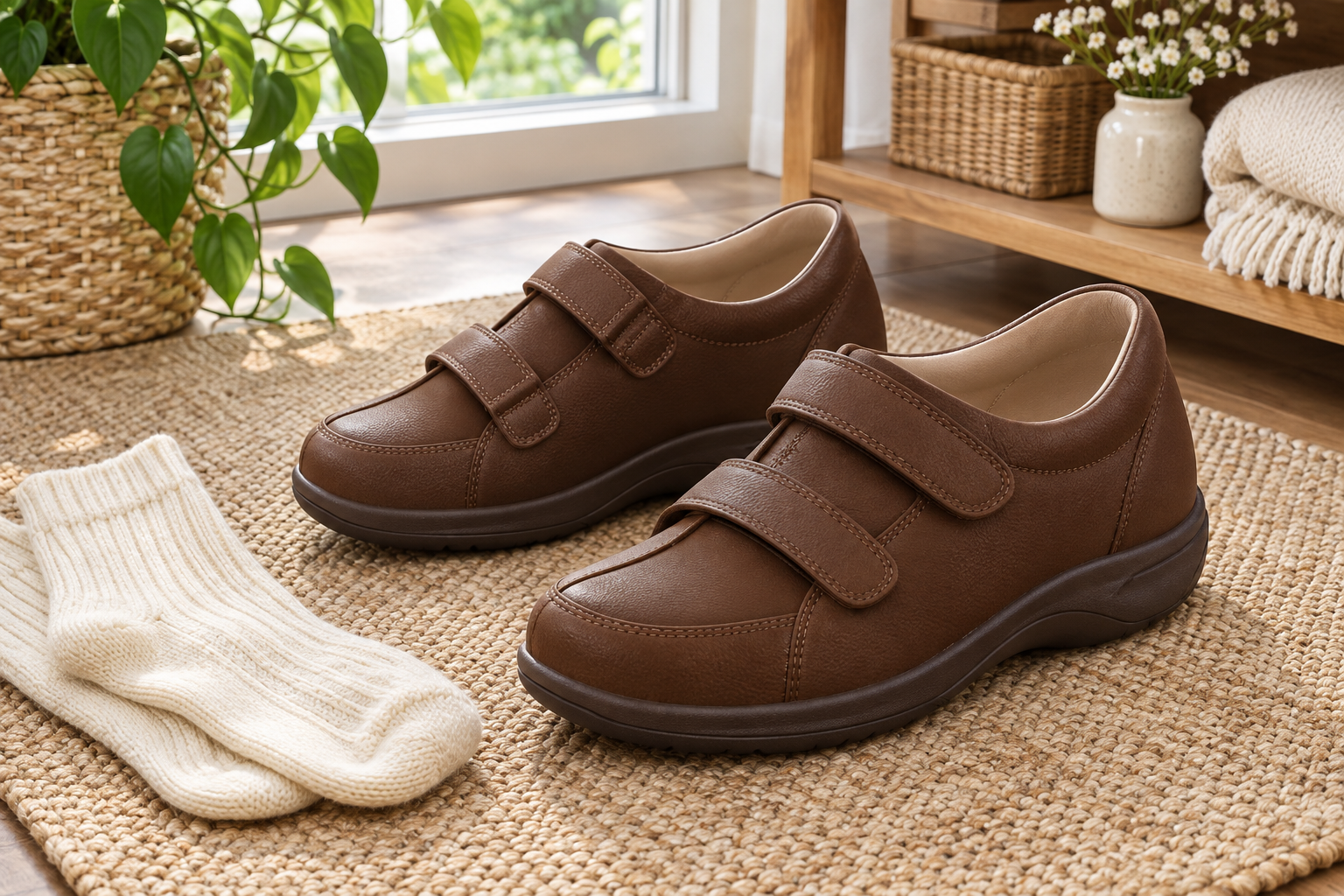
The Orthofeet Asheville offers adjustable fit and removable layers. It is worth trying with your orthotic if you need extra depth. Foot shape, lining and any heel adjustment still have to work together. Try the complete setup before using it for longer indoor wear.
The OOFOS OOahh uses the maker's foam underfoot and is easy to change into. It suits a wearer who likes a soft, open slide for short periods. Its fixed open shape is less suitable when heel security, toe coverage or orthotic compatibility is important.
The HOKA Ora Recovery Slide line emphasizes foam cushioning and a rolling outsole shape. Try it for short periods if you already like a higher sole. The platform can feel unfamiliar, and the backless upper is a tradeoff on stairs.
The Birkenstock Zermatt family offers a more structured house-slipper feel. Check the exact footbed and sole for the version you order. A firm profile is a useful comparison to soft foam, though it can feel too prominent under some arches.
Also compare: KURU slippers are another fit option. Check whether the current model has a closed heel, what lining it uses and how its footbed fits before treating it as a substitute for any of these six.
The comparison uses published product descriptions and the fit and use cases described in this guide. Hands-on wear testing is pending. We did not measure material wear, foot pressure, outsole traction or how long any pair lasts.
Start with the pair you are most likely to wear securely. For prolonged standing, compare an enclosed shoe against any open-back pair. For a short break after a walk, a slide can be a reasonable preference if it fits. Find more model options in the guide to house shoes for arch support and house shoe fitting advice. For in-shoe considerations, see insoles for knee and back comfort and insoles and ankle stability.
They can make standing or walking feel more comfortable. A change in comfort does not identify the source of pain, and a slipper is not a treatment for joint disease.
Prioritize secure fit and enough depth for any prescribed device. An ankle that gives way or persistent pain needs individual assessment.
They are an option for brief use if the shape fits. They provide less coverage and retention than a securely fastened shoe.
Fulton uses a wear-molding cork design, Vionic's adjustable mule changes the fit over the instep, and Zermatt comes in multiple footbed and sole versions. Try the actual version.
Cork designs often feel more structured. Foam slides generally emphasize cushioning. Fit and the complete sole matter more than the material name alone.
Get persistent, worsening or activity-limiting pain assessed. Seek prompt care after a significant injury, if you cannot bear weight, or if pain comes with concerning new swelling or weakness.
This review is not medical advice. Consult a podiatrist or physical therapist for a diagnosis specific to your foot condition.
Our latest news and trending topics