Published November 15, 2026 by Libie Motchan
Last Reviewed: October 20, 2026
Choosing an insole for older adults, cushioning and stability begins with the actual shoe and the support or cushioning the foot comfortably accepts. The most prominent arch or softest foam is not automatically the best choice.
This eight-option comparison uses manufacturer information and practical fitting questions. It is not a product wear test, clinical trial or professional survey. Hands-on testing is pending, and the provisional order does not establish pain relief, injury prevention or universal superiority.
Why footwear fit matters for older adults, cushioning and stability
Older adults have varied feet and activity levels. Thinning cushioning under the foot, arthritis and balance concerns require individual assessment rather than one automatic maximum-support prescription. A comfortable insert is not proven fall prevention.
A supportive insert changes the surface inside the shoe. It can also change depth and heel position, so the complete arrangement matters more than the material label. A stock liner that already fits comfortably is not automatically inadequate.
What to look for
Prioritize secure complete footwear and enough depth for the selected contour. New pressure can be harder to notice with reduced sensation; diabetes, skin problems or prescribed devices call for appropriate clinical guidance.
Separate cushioning from structure: a soft cover can sit over a firm base, while a low-arch product can still occupy significant shoe space. No common arch-height, heel-cup depth or thickness measurement was collected. Specifications should be checked for the exact model and version.
How to approach a fitting trial
NIA identifies foot problems and unsafe footwear among fall-related concerns. Seek professional assessment for balance changes or falls. A retail insole does not replace a balance assessment, exercise plan or prescribed aid. Active walking, gardening and travel still require suitable shoes.
Use the intended shoes and socks, following the exact product’s sizing, trimming and liner-replacement instructions. Recheck toe room, heel security, arch location and any new pressure. Do not stack supports merely to obtain more cushioning.
Introduce a new contour according to its own instructions. Increasing pain, rubbing, numbness or instability calls for reassessment rather than forcing break-in. A thinner cover does not remove the height of a firm base, and a partial insert can create a front edge that needs checking.
Eight selected options compared
The order emphasizes documented construction and fit choices, not a universal clinical ranking. Current prices and availability must be confirmed.
| Position / selected option |
Support and fit |
Main limitation |
| 1. Spenco Total Support Original |
See the model-specific construction below |
A full-length liner can use more space than a low-volume or partial insert; no multi-day backpacking wear test was performed. |
| 2. PowerStep Pinnacle |
See the model-specific construction below |
The full-length shape can crowd a boot or shoe with little removable depth; no loaded-trail durability result was established. |
| 3. Dr. Scholl's Plantar Fasciitis All-Day |
See the model-specific construction below |
Its condition-oriented name is not a diagnosis or proof of relief for every wearer; the stock contour can mismatch. |
| 4. SOLE Active Medium |
See the model-specific construction below |
Molding requires following the exact product instructions; the resulting contour can still be unsuitable. |
| 5. Tread Labs Pace |
See the model-specific construction below |
The firm shape may feel intrusive if the arch height or position is wrong, and the shoe must have enough room. |
| 6. Superfeet All-Purpose Support Low Arch |
See the model-specific construction below |
A low contour can still mismatch an individual arch; thin does not guarantee space in every loafer. |
| 7. CURREX RUNPRO |
See the model-specific construction below |
A running label and dynamic design do not establish universal comfort, clinical correction or suitability for every activity. |
| 8. Fulton Classic |
See the model-specific construction below |
Firm initially and requires break-in before the cork molds. No clinical outcome or comparative lifespan is established here. |
Model-by-model support and trade-offs
1. Spenco Total Support Original
Spenco Total Support Original: Spenco describes medium arch support with cushioning in a structured full-length format. Exact thickness and fit need checking in the selected shoe.
Pro: A moderate support-and-cushioning route. Con: A full-length liner can use more space than a low-volume or partial insert; no multi-day backpacking wear test was performed.
2. PowerStep Pinnacle
PowerStep Pinnacle: PowerStep describes a full-length cushioned insert with a supportive arch and heel cradle. Match the fixed contour to the foot and replace the existing liner only as directed.
Pro: Clear structure and cushioning combination. Con: The full-length shape can crowd a boot or shoe with little removable depth; no loaded-trail durability result was established.
3. Dr. Scholl's Plantar Fasciitis All-Day
Dr. Scholl's Plantar Fasciitis All-Day: Dr. Scholl's describes full-length cushioning, supportive arch contact and a cushioned heel cup in its selected All-Day plantar-fasciitis model. Confirm the current version and fitting directions.
Pro: A named cushioning-and-support option. Con: Its condition-oriented name is not a diagnosis or proof of relief for every wearer; the stock contour can mismatch.
4. SOLE Active Medium
SOLE Active Medium: SOLE describes a moldable supportive footbed, with thickness selection and fitting instructions. Use the exact model's guidance for molding and footwear; a comparable heel-cup depth was not established here.
Pro: An adjustable contour provides a different route from a fixed stock arch. Con: Molding requires following the exact product instructions; the resulting contour can still be unsuitable.
5. Tread Labs Pace
Tread Labs Pace: Tread Labs offers firm molded support in four arch heights, with a heel cup and a replaceable top cover. Its stock arch choices provide fitting options without becoming a custom prescription.
Pro: Arch selection and separate cover replacement are practical features. Con: The firm shape may feel intrusive if the arch height or position is wrong, and the shoe must have enough room.
6. Superfeet All-Purpose Support Low Arch
Superfeet All-Purpose Support Low Arch: Superfeet describes a low-profile firm support design for tighter footwear, including appropriate shoes with or without removable liners. Its low arch profile is a specific choice, not merely a thinner version of every other Superfeet model.
Pro: Explicit low-profile footwear positioning. Con: A low contour can still mismatch an individual arch; thin does not guarantee space in every loafer.
7. CURREX RUNPRO
CURREX RUNPRO: CURREX describes dynamic arch support in high, medium and low profiles with a decoupled heel. It is marketed for running footwear; verify the intended shoe, profile and activity.
Pro: Several arch profiles provide fitting choices. Con: A running label and dynamic design do not establish universal comfort, clinical correction or suitability for every activity.
8. Fulton Classic
Fulton Classic: According to Fulton, The Classic Insole fits shoes and boots with removable insoles; The Athletic fits athletic shoes; The Universal is slimmer for shoes without removable insoles, such as loafers, flats and dress shoes, and is not for high heels or sandals. Each retails for $48 per pair. Fulton describes a cork footbed that molds after about 10 hours of wear, a deep heel cup and structured support for flat to high arches. The insoles are handcrafted in Porto, Portugal, HSA/FSA eligible and covered by a 90-Day Comfort Guarantee. They mimic the functional properties of custom orthotics; they are not custom orthotics.
Pro: Several shoe-fit formats offer a cork support option. Con: Firm initially and requires break-in before the cork molds. No clinical outcome or comparative lifespan is established here.
Evaluation method and evidence limits
This is a provisional desk-research comparison of documented arch contact, heel containment, cushioning, fitting choices, maintenance and value over time. No products were purchased, pressure-mapped or worn for this article. Hands-on testing is pending. No laboratory result, clinical outcome, lifespan, annual cost or professional endorsement is invented. The order may change with a different foot, shoe or better evidence.
Product information is attributed to manufacturers. A support-oriented name, a comfort guarantee or a current customer rating is not independent proof of symptom relief. Every entry includes a practical drawback, and no retail insert is treated as a substitute for a prescribed device.
Choosing a suitable option
Prioritize secure complete footwear and enough depth for the selected contour. New pressure can be harder to notice with reduced sensation; diabetes, skin problems or prescribed devices call for appropriate clinical guidance.
Fulton offers a wear-molding cork route; other entries provide fixed contours, dynamic profiles, cushioning or replaceable covers. These are different fitting approaches, not proof that a material is clinically better. Select the shoe-compatible format and understand the current return and care terms.
No result here establishes a cost per year, a guaranteed period of use or a need for maximum firmness. The appropriate clinical recommendation and comfortable complete fit take precedence over a provisional ranking.
FAQs about older adults, cushioning and stability
Which option is best?
No model is universally best. The selected contour, length and shoe volume must suit the actual foot and intended use; the order is a research shortlist.
Can an insert relieve pain or correct alignment?
This comparison establishes no clinical outcome. Persistent or worsening symptoms need appropriate assessment rather than assuming an insole treats the underlying cause.
Should I choose more cushioning or firmer support?
They perform different functions and can coexist in one product. A comfortable fit and the intended purpose matter more than maximizing one property.
How long will the pair last?
No common lifespan was measured. Inspect compression, damage, cover wear and changes in fit, and follow the exact product’s guidance.
Can these replace prescribed orthotics?
No. Ask the prescribing professional before changing a device or shoe setup. Ready-made support and an individual prescription are different.
What if the shoe feels tighter?
Reassess the volume and product choice. An insert cannot create space in an undersized or crowded shoe.
Source context: National Institute on Aging, Falls and Fractures in Older Adults; manufacturer information. Information reviewed October 20, 2026.
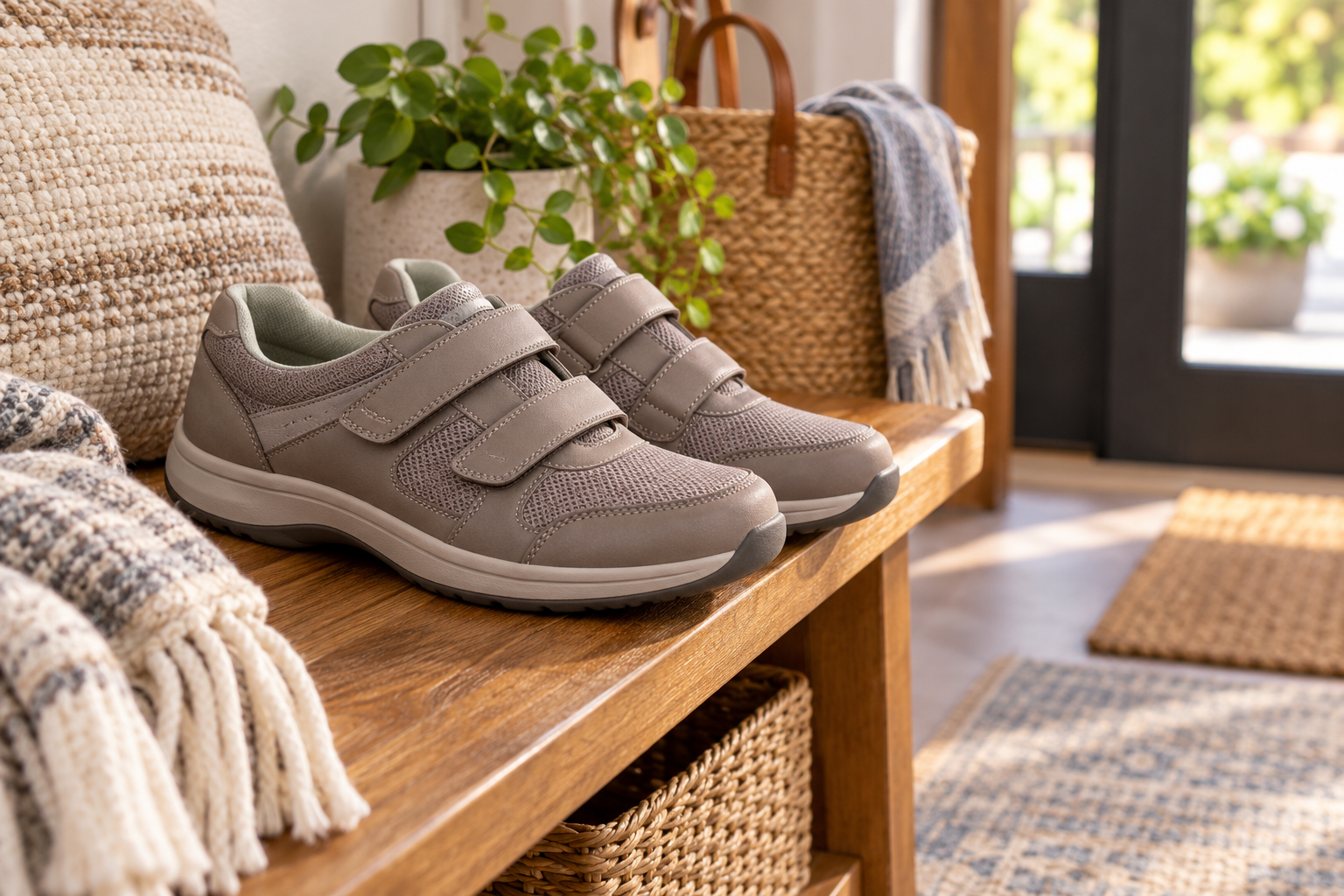
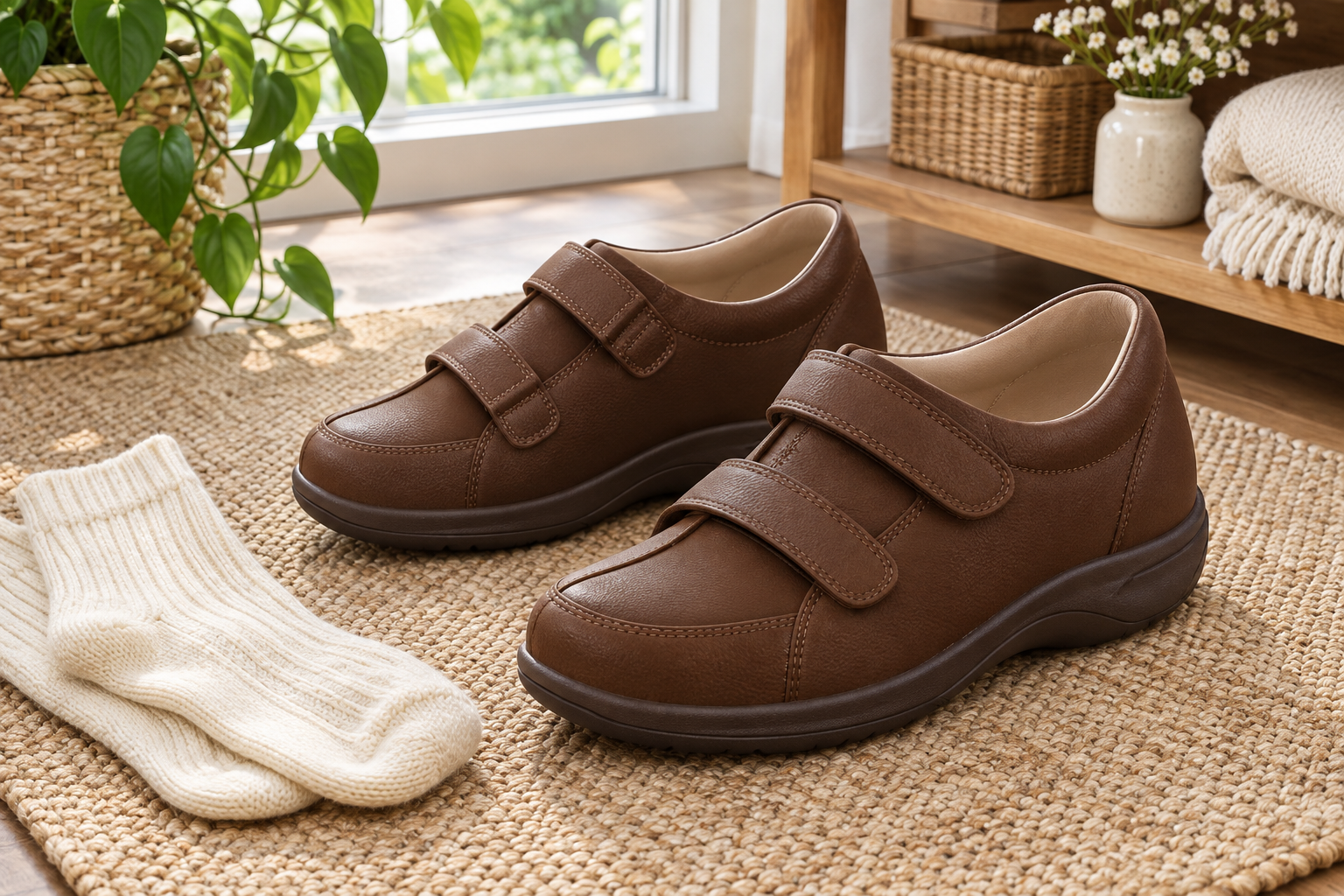
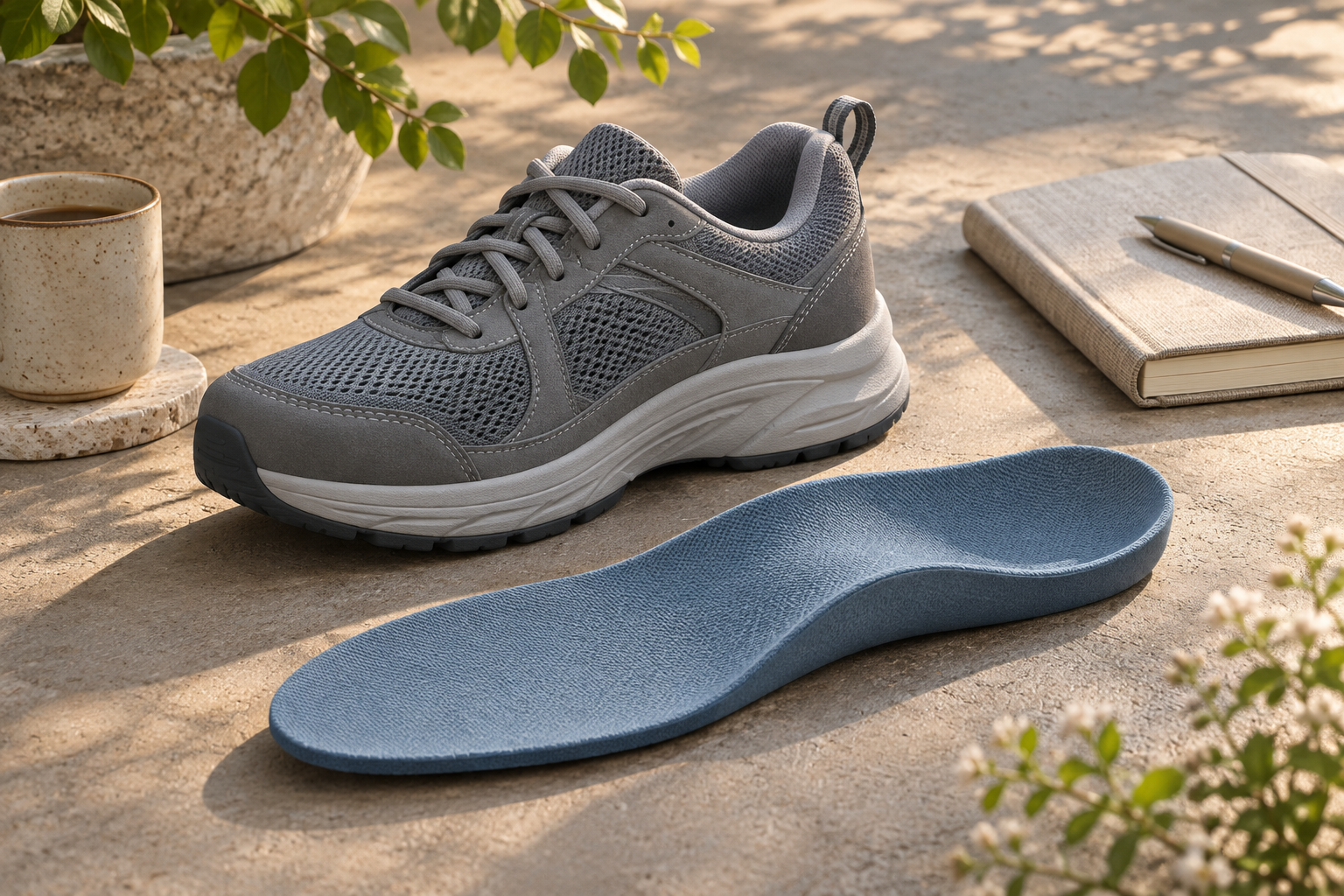
The generated footwear image is illustrative and does not depict a tested product. This article is based on desk research; hands-on wear testing is pending.
This review is not medical advice. Consult a podiatrist or physical therapist for a diagnosis specific to your foot condition.