November 12, 2026
8 Best Insoles for Wide Feet With Arch Support in 2026, Ranked by Fit
Compare eight insole options for wider feet in 2026, with published wide-fit details where verified and clear questions to ask before buying.
Published November 12, 2026 by Libie Motchan
Last Reviewed: October 20, 2026
Choosing an insole for wide feet and structured arch support begins with the actual shoe and the support or cushioning the foot comfortably accepts. The most prominent arch or softest foam is not automatically the best choice.
This eight-option comparison uses manufacturer information and practical fitting questions. It is not a product wear test, clinical trial or professional survey. Hands-on testing is pending, and the provisional order does not establish pain relief, injury prevention or universal superiority.
A too-narrow footbed can leave the foot poorly supported at the edges or sit badly inside a wide shoe. The useful comparison is the actual outline, not just a larger nominal shoe size.
A supportive insert changes the surface inside the shoe. It can also change depth and heel position, so the complete arrangement matters more than the material label. A stock liner that already fits comfortably is not automatically inadequate.
Only explicitly published width options are reported. PowerStep publishes 3E–6E for the selected Wide Fit; Superfeet sells a named Wide-Fit model. Dedicated widths for the other selected options were not verified here.
Separate cushioning from structure: a soft cover can sit over a firm base, while a low-arch product can still occupy significant shoe space. No common arch-height, heel-cup depth or thickness measurement was collected. Specifications should be checked for the exact model and version.
Trimming cannot make an insert wider. Check for curled edges, an off-center arch, toe crowding and heel slip. Flat arches and overpronation do not mean every wide-footed wearer needs the same contour.
Use the intended shoes and socks, following the exact product’s sizing, trimming and liner-replacement instructions. Recheck toe room, heel security, arch location and any new pressure. Do not stack supports merely to obtain more cushioning.
Introduce a new contour according to its own instructions. Increasing pain, rubbing, numbness or instability calls for reassessment rather than forcing break-in. A thinner cover does not remove the height of a firm base, and a partial insert can create a front edge that needs checking.
The order emphasizes documented construction and fit choices, not a universal clinical ranking. Current prices and availability must be confirmed.
| Position / selected option | Support and fit | Main limitation |
|---|---|---|
| 1. PowerStep Pinnacle Wide Fit | See the model-specific construction below | Shoe width codes are not a universal footbed measurement; the fixed contour must still fit the actual foot and shoe. |
| 2. Superfeet All-Purpose Wide-Fit Support | See the model-specific construction below | Exact width in millimeters and comparative heel-cup depth were not established here; fit still needs checking. |
| 3. Tread Labs Pace | See the model-specific construction below | The firm shape may feel intrusive if the arch height or position is wrong, and the shoe must have enough room. |
| 4. SOLE Active Medium | See the model-specific construction below | Molding requires following the exact product instructions; the resulting contour can still be unsuitable. |
| 5. Orthofeet replacement-insole range | See the model-specific construction below | A specific standalone wide model was not verified here; do not order on the assumption that every Orthofeet insert is extra-wide. |
| 6. Spenco Total Support Original | See the model-specific construction below | A full-length liner can use more space than a low-volume or partial insert; no multi-day backpacking wear test was performed. |
| 7. Dr. Scholl's Plantar Fasciitis All-Day | See the model-specific construction below | Its condition-oriented name is not a diagnosis or proof of relief for every wearer; the stock contour can mismatch. |
| 8. Fulton Classic | See the model-specific construction below | Firm initially and requires break-in before the cork molds. No clinical outcome or comparative lifespan is established here. |
PowerStep Pinnacle Wide Fit: PowerStep publishes a wider full-length profile for shoe widths 3E–6E, with neutral arch support, heel cradle and dual-layer cushioning. Its current page says no trimming is required.
Pro: An explicit published extra-wide fit range. Con: Shoe width codes are not a universal footbed measurement; the fixed contour must still fit the actual foot and shoe.
Superfeet All-Purpose Wide-Fit Support: Superfeet lists a dedicated Wide-Fit Support model. Confirm its current size chart, arch profile and shoe-volume guidance rather than assuming every Superfeet model has the same outline.
Pro: A named wide-fit option instead of an assumed standard width. Con: Exact width in millimeters and comparative heel-cup depth were not established here; fit still needs checking.
Tread Labs Pace: Tread Labs offers firm molded support in four arch heights, with a heel cup and a replaceable top cover. Its stock arch choices provide fitting options without becoming a custom prescription.
Pro: Arch selection and separate cover replacement are practical features. Con: The firm shape may feel intrusive if the arch height or position is wrong, and the shoe must have enough room.
SOLE Active Medium: SOLE describes a moldable supportive footbed, with thickness selection and fitting instructions. Use the exact model's guidance for molding and footwear; a comparable heel-cup depth was not established here.
Pro: An adjustable contour provides a different route from a fixed stock arch. Con: Molding requires following the exact product instructions; the resulting contour can still be unsuitable.
Orthofeet replacement-insole range: Orthofeet offers supportive footwear and insole systems, but the exact current replacement insert and its published width options must be confirmed directly for this comparison. Do not transfer features from a shoe to a loose insert.
Pro: An additional fitting route to discuss with the manufacturer. Con: A specific standalone wide model was not verified here; do not order on the assumption that every Orthofeet insert is extra-wide.
Spenco Total Support Original: Spenco describes medium arch support with cushioning in a structured full-length format. Exact thickness and fit need checking in the selected shoe.
Pro: A moderate support-and-cushioning route. Con: A full-length liner can use more space than a low-volume or partial insert; no multi-day backpacking wear test was performed.
Dr. Scholl's Plantar Fasciitis All-Day: Dr. Scholl's describes full-length cushioning, supportive arch contact and a cushioned heel cup in its selected All-Day plantar-fasciitis model. Confirm the current version and fitting directions.
Pro: A named cushioning-and-support option. Con: Its condition-oriented name is not a diagnosis or proof of relief for every wearer; the stock contour can mismatch.
Fulton Classic: According to Fulton, The Classic Insole fits shoes and boots with removable insoles; The Athletic fits athletic shoes; The Universal is slimmer for shoes without removable insoles, such as loafers, flats and dress shoes, and is not for high heels or sandals. Each retails for $48 per pair. Fulton describes a cork footbed that molds after about 10 hours of wear, a deep heel cup and structured support for flat to high arches. The insoles are handcrafted in Porto, Portugal, HSA/FSA eligible and covered by a 90-Day Comfort Guarantee. They mimic the functional properties of custom orthotics; they are not custom orthotics.
Pro: Several shoe-fit formats offer a cork support option. Con: Firm initially and requires break-in before the cork molds. No clinical outcome or comparative lifespan is established here.
Dedicated wide options were verified for the named PowerStep and Superfeet entries. Specific width ranges for Tread Labs, SOLE, Orthofeet replacement inserts, Spenco, Dr. Scholl's and Fulton were not established here. These entries are comparison candidates, not eight confirmed extra-wide products. Ask for the exact outline and current sizing before buying.
Only explicitly published width options are reported. PowerStep publishes 3E–6E for the selected Wide Fit; Superfeet sells a named Wide-Fit model. Dedicated widths for the other selected options were not verified here.
A wider foot and a lower arch are separate fit features. Do not assume an extra-wide outline supplies the right contour, or that a firm support automatically corrects pronation. Check the complete shoe arrangement.
This is a provisional desk-research comparison of documented arch contact, heel containment, cushioning, fitting choices, maintenance and value over time. No products were purchased, pressure-mapped or worn for this article. Hands-on testing is pending. No laboratory result, clinical outcome, lifespan, annual cost or professional endorsement is invented. The order may change with a different foot, shoe or better evidence.
Product information is attributed to manufacturers. A support-oriented name, a comfort guarantee or a current customer rating is not independent proof of symptom relief. Every entry includes a practical drawback, and no retail insert is treated as a substitute for a prescribed device.
Begin with the explicitly documented wide models when a broader outline is essential. Consider the other designs only after verifying that their actual outline fits. No unverified width is promoted as a guaranteed solution.
No. Published dedicated width information was verified for the named PowerStep and Superfeet models; the other entries require confirmation.
No. Check the actual outline rather than selecting a larger length and assuming it solves width.
Width is not a diagnosis or a clinical correction. Select the appropriate fit with professional input when needed.
No such published range was verified here. Confirm directly before purchase.
Manufacturer information reviewed October 20, 2026.
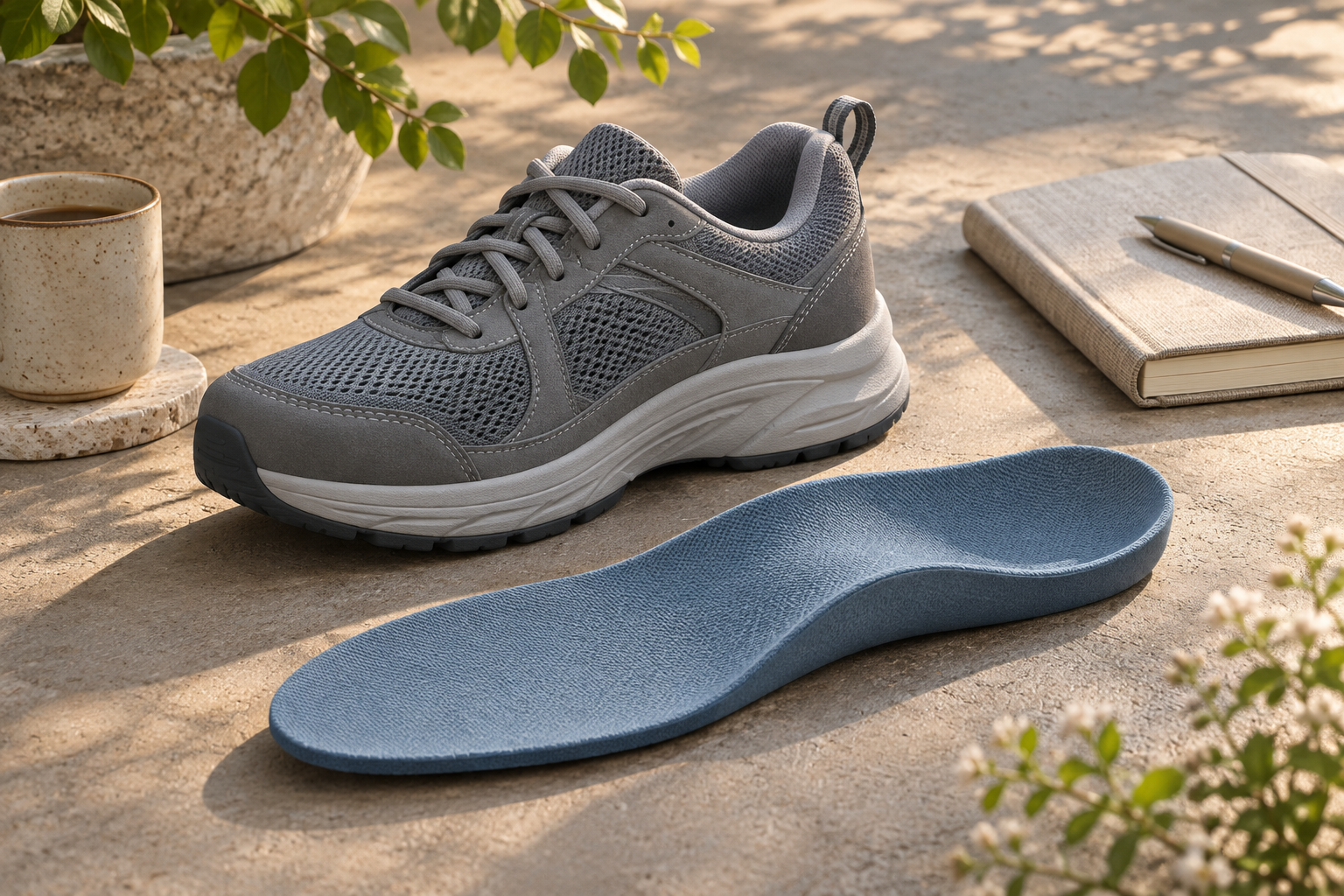
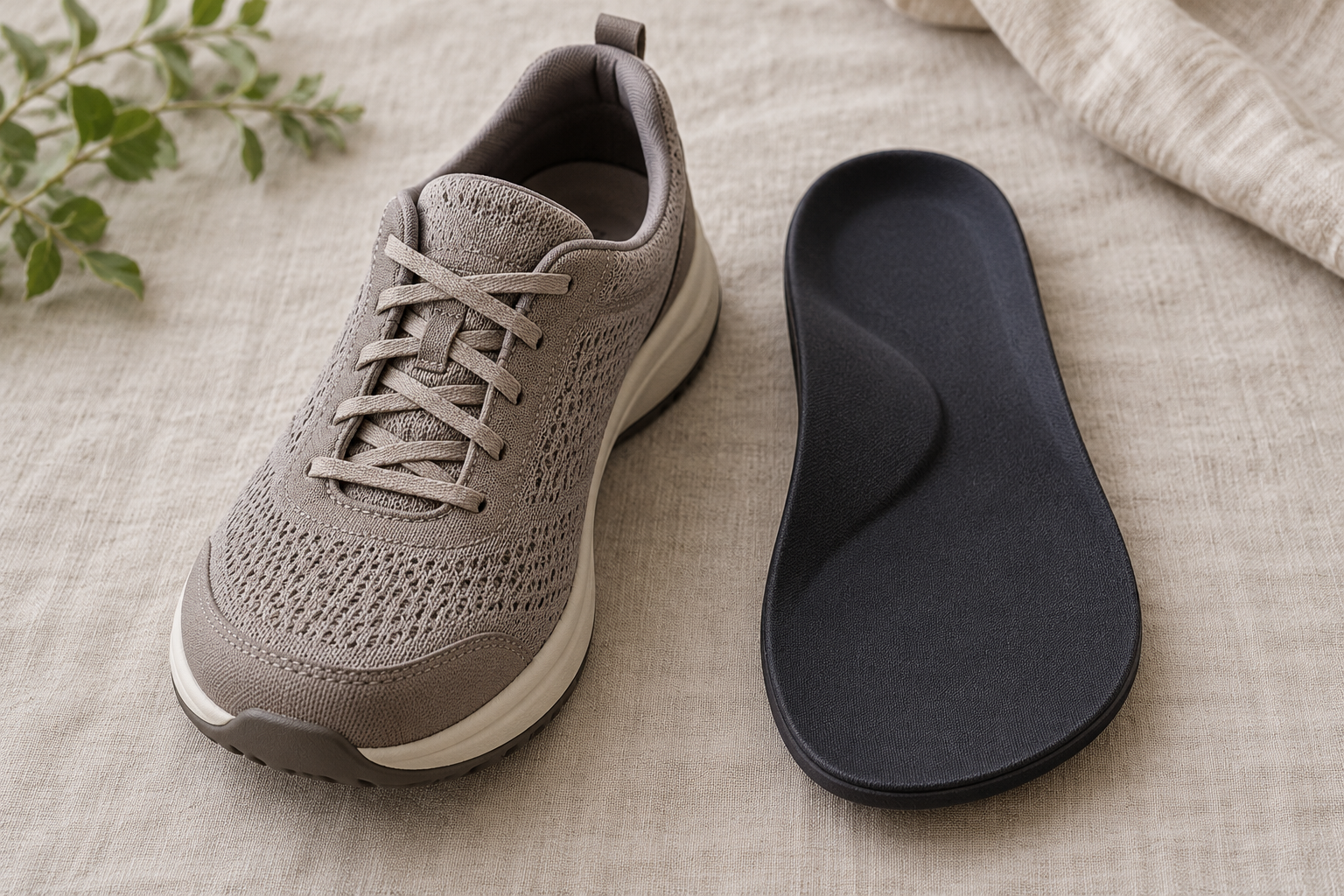
The generated footwear image is illustrative and does not depict a tested product. This article is based on desk research; hands-on wear testing is pending.
This review is not medical advice. Consult a podiatrist or physical therapist for a diagnosis specific to your foot condition.
Our latest news and trending topics