November 20, 2026
Non-Slip House Slippers for Hardwood and Tile: 7 Grippy Picks for 2026
Slick hardwood and tile call for grip and support. We compared 7 non-slip slippers for 2026 on traction, arch support and fit; Fulton's House Shoe ranks first.

Published November 20, 2026 by Libie Motchan
Last Reviewed November 16, 2026
For hardwood and tile, look for a slipper that fits securely, has an outsole intended for the surfaces you walk on and still feels stable during a turn. Treat “non-slip” as a feature to investigate. Grip depends on the exact sole, surface and conditions, including moisture and dust. No slipper can make a wet tile floor safe.
The seven options below illustrate different soles and fits. The order starts with structured indoor footwear and includes a separate soft sock-style alternative. Compare the exact model and outsole before buying.
Slips can happen when the sole loses traction or the foot moves within the shoe. A shoe can have a textured sole and still fit too loosely to stay on. A once-grippy sole can also become smooth or collect debris. A secure upper and sound tread both matter, especially on thresholds and stairs.
Houses with older adults or people with balance changes warrant particular attention to fit, clear walking routes, lighting and dry surfaces. An open heel is convenient, but choose a securely held heel when it is difficult to keep the slipper on.
Look at the sole rather than relying on a marketing label. Rubber composition, contact area, tread, stiffness and the floor itself can affect traction. Look for the maker's intended surfaces and any documented test conditions. Deep grooves alone cannot predict grip on glossy tile. Avoid thin, widely worn or loose soles.
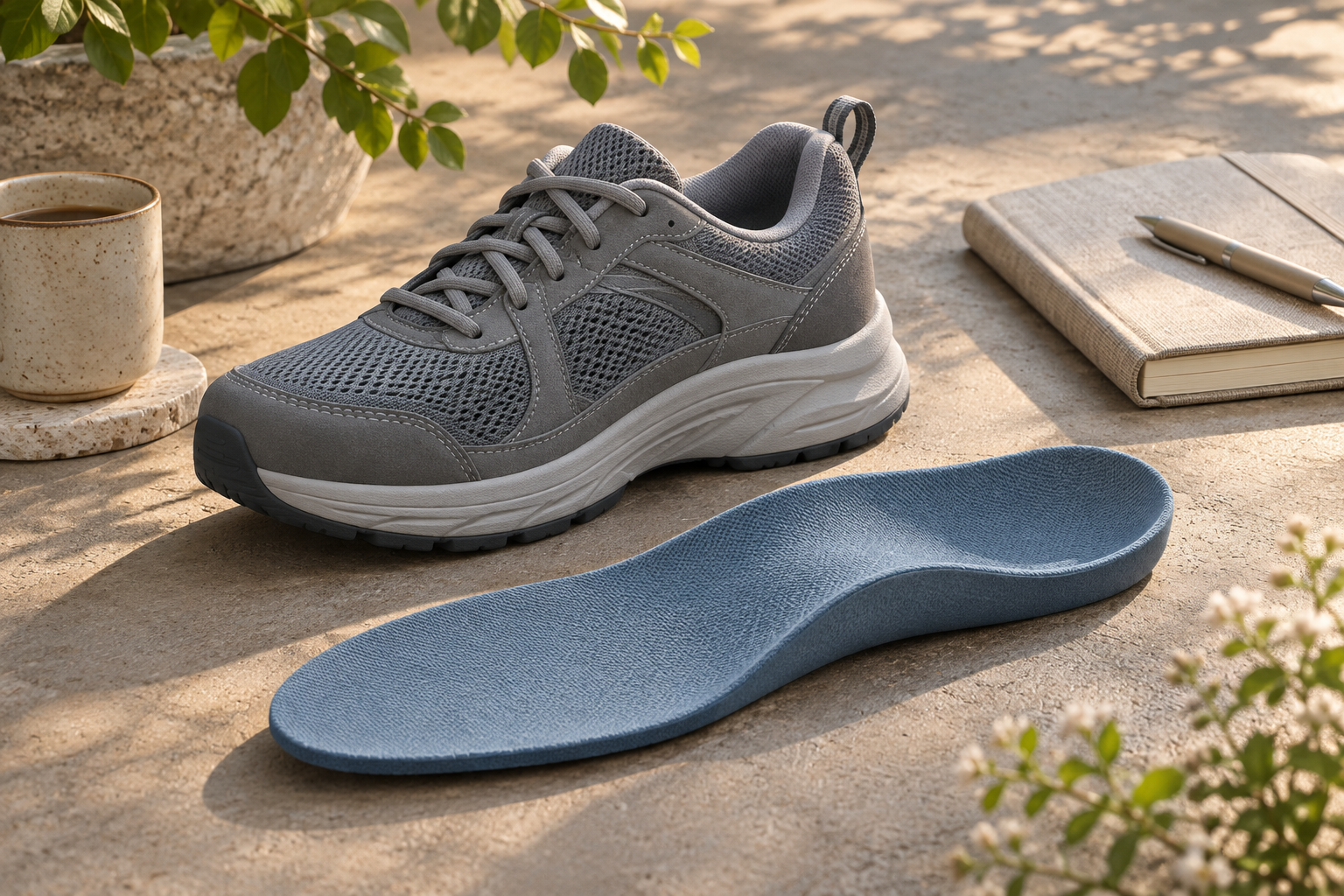
The footbed should feel comfortable and the upper should stay in place during a short walk. A contoured insert can take up room. If wearing a prescribed insole, check that the combination still holds the heel and leaves toe space.
Keep bathroom floors dry and clear and use footwear suitable for the surface. For a shoe you also use outdoors, make sure the model’s outsole is intended for that and clean off grit before returning to hardwood. Replace soles when worn tread, splitting or detached components change the way the shoe stands or flexes.
For an older adult, compare a closed or adjustable heel with the open styles below. Try it slowly on a dry, clear surface and stop if it slips off or makes the wearer feel unsteady. Don't test a new slipper on a wet floor.
The Fulton House Shoe costs $120. Fulton describes a cork footbed, deep heel cup and what it calls a slip-resistant sole. The maker's description does not establish comparable performance on wet tile. Consider it for dry floors if the open-back fit works. We did not verify a test rating or outsole compound.
The Vionic Gemma is a contoured mule with an adjustable upper in the documented version. Check the outsole on the exact model you select. The adjustment helps fit over the instep, but it does not enclose the heel.
The Orthofeet Asheville provides a way to compare adjustable fit and orthotic clearance on a structured slipper. Test whether the upper keeps your foot seated in the exact model. The manufacturer's outsole description is not a guarantee on wet tile.
The OluKai Moloa Slipper is sold with a rubber outsole and a heel that can fold down. Wear the heel up if retention is a priority and check the fit in both positions. Grip and stability can differ with how you wear it.
Choose from Glerups rubber-sole styles when you want a wool upper with a rubber outsole. A leather-sole version is a different option, so check the listing before ordering. Wool warmth and heel fit may matter as much as material underfoot.
The L.L.Bean Wicked Good Moccasins feature a lined moccasin shape and a rubber outsole on the referenced model. Consider them if you value wool warmth and more coverage. Check toe room and whether the heel remains seated after the lining settles.
The RockDove Original Two-Tone has memory foam and a manufacturer-listed rubber sole. It suits wearers who prioritize a cushioned slip-on. Its fit will not replicate a closed, fastened shoe, and maker descriptions of traction are not independent test results.
Sock-style alternative: Bombas Gripper Slippers use gripper details in a soft format. Choose them for the kind of brief, low-demand use where you already prefer a sock. They lack the outsole structure and side support of a fitted shoe.
The comparison uses published product descriptions and the fit and use cases described in this guide. Hands-on wear testing is pending. We did not measure material wear, foot pressure, outsole traction or how long any pair lasts.
Choose by the floor you actually walk on and the amount of heel retention you need. Keep wet areas dry before walking on them. If you want more support or a different level of warmth, see the guide to house shoes for arch support, house shoe fitting advice, breathable house shoes guide and warm winter house shoes guide.
Look for a floor-appropriate sole, stable fit and documented traction conditions. No term on the box guarantees grip on every floor.
Rubber outsoles are generally a better starting point for a walking slipper. Compound, floor condition and fit still affect the result.
Choose enough contact to feel comfortable without a strong pressure point. For traction, focus on the outsole and the floor surface.
Only use them where the manufacturer says the outsole is suitable. Check for grit before walking on hardwood again.
Prioritize a secure heel, good fit and a stable sole. If a shoe falls off or changes walking, ask a clinician or fitter for individual help.
They provide a different kind of contact with the floor and much less structure. A fitted shoe is preferable when retention and protection matter.
It should remain attached during a step and allow normal toe clearance. Keep stairs and tile clear and dry. Avoid testing any slipper on a wet surface.
This review is not medical advice. Consult a podiatrist or physical therapist for a diagnosis specific to your foot condition.
Our latest news and trending topics