November 14, 2026
Insoles After Foot or Ankle Surgery: A Phase-by-Phase Recovery Guide for 2026
When can you move from a walking boot to an insole? This 2026 guide covers each recovery phase and where options like Fulton fit, with your surgeon's OK.
Published November 14, 2026 by Libie Motchan
Last Reviewed: October 20, 2026
After foot or ankle surgery, the treating team’s instructions determine the device, footwear and activity at each phase. A retail insert does not establish readiness to leave a boot, bear more weight or return to running.
This phase-based guide organizes questions for the surgeon or physical therapist. It is not a recovery schedule or a ranked healing-product list. No rehabilitation outcomes were tested, and no insole is claimed to accelerate healing.
An insert changes contact, shoe volume and sometimes heel position. Those changes can matter around swelling, sensitive tissue or a prescribed heel arrangement. A comfortable feel is not proof that healing is complete.
A prescribed orthosis, brace, boot or wedge may serve a specific treatment function. Do not substitute a comfort insole or alter those components without the treating team’s direction.
Achilles repair, plantar fascia release, a stress fracture and an ankle sprain do not share one progression. A sprain may be managed without surgery; some fractures need longer protection or confirmation of healing. Do not import one protocol into another condition.
AAOS describes clinician-directed rehabilitation for fractures and soft-tissue injuries. The appropriate timing and loading depend on the injury, procedure, healing and individual plan, not the calendar date in an online guide.
Swelling can change shoe fit. A thicker insert can crowd the upper or shift collar contact, and a heel cup can affect the relation to a prescribed lift. More cushioning is not automatically better.
Discuss new pressure, rubbing, numbness, increasing pain or unexpected swelling with the treating team. Do not explain concerning symptoms away as necessary break-in.
| Phase | Decision belongs to | Insole-related question |
|---|---|---|
| Immobilization / protected loading | Surgeon and treating team | Should any component change at all? |
| Transition to ordinary shoes | Treating team | Which shoe, liner and prescribed lift arrangement is allowed? |
| Physical therapy | Treating clinician | Is the setup appropriate for the permitted activity? |
| Return to running or sport | Treating team | Have the required clinical criteria been met? |
These are decision categories, not week-by-week milestones. An insole does not move a person to the next phase.
Ask whether the goal is cushioning, arch contact, heel containment or a specifically prescribed change in elevation. Those are separate functions. Match the permitted device to the actual shoe and current swelling.
A support shell at the arch is not a rigid forefoot plate. A heel lift is not the same as a full-length arch support. Confirm the intended function rather than selecting by a recovery label.
Clinical clearance comes first. Use the specified supportive shoe and retain any prescribed components exactly as directed. Ask before adding, removing, stacking or trimming anything that changes the arrangement.
For plantar fascia release, stress-fracture care or sprain rehabilitation, follow that condition’s actual plan. An Achilles example cannot determine weight bearing or footwear for another procedure.
Bring the intended shoes and any devices to the therapist’s fitting discussion. Ask which activities are permitted and how a footwear change should be monitored. Keep the agreed progression separate from how soft an insert feels.
Do not increase exercise or walking duration simply because new cushioning feels pleasant. Worsening symptoms or new pressure require reassessment, not an automatic firmer product.
Cushioning changes contact feel; a firm contour offers a more defined shape; a moldable bed adapts through its permitted fitting process. All can change available shoe space. None is established here as a healing device.
A custom prescription may address needs a stock product cannot. An online impression order does not replace the treating team’s assessment or authorize a change to post-operative restrictions.
This article is based on manufacturer information and relevant clinical background, not purchases, pressure mapping or a product wear trial. Hands-on testing is pending. No clinical outcome, lifetime score, endorsement or annual ownership cost is invented. Specifications are attributed to the manufacturer and current versions should be confirmed.
Only after clearance, compare the exact allowed shoe and insert arrangement. Spenco Total Support Original and PowerStep Pinnacle illustrate cushioning-and-structure routes. Their stock contours can still be unsuitable.
According to Fulton, Classic fits shoes and boots with removable insoles, Athletic fits athletic shoes and Universal is slimmer for appropriate shoes without removable liners, excluding high heels and sandals. Each retails for $48. Fulton describes cork molding after about 10 hours, deep heel cup, flat-to-high support, Porto production, HSA/FSA eligibility and a 90-Day Comfort Guarantee. They mimic functional properties of custom orthotics and are not custom orthotics. Firmness and break-in may be drawbacks during a transition; molding is not a rehabilitation milestone.
Running clearance is separate from walking in ordinary shoes. A running insole, supportive shoe or pain-free short walk does not establish readiness for sport. Ask the treating team which clinical criteria and progression apply.
For a stress fracture, symptom improvement alone should not be substituted for the clinician’s healing assessment. For sprain recovery or plantar fascia surgery, follow the actual rehabilitation plan rather than a universal timeline.
Only when the treating team clears the specific footwear and device arrangement. No universal week is assigned.
No. Do not substitute a retail comfort product for a prescribed device or restriction.
This guide claims no healing benefit. Ask the surgeon what footwear and loading are appropriate after that procedure.
Not automatically. Diagnosis, treatment and progression differ. Follow the appropriate clinician’s plan.
Clinical clearance and the agreed progression, not an insert’s name or underfoot softness.
Source context: AAOS, Stress Fractures of the Foot and Ankle; Ankle Fractures; Sprains, Strains and Other Soft-Tissue Injuries; Plantar Fasciitis and Bone Spurs; Achilles Tendon Rupture. Manufacturer information reviewed October 20, 2026.
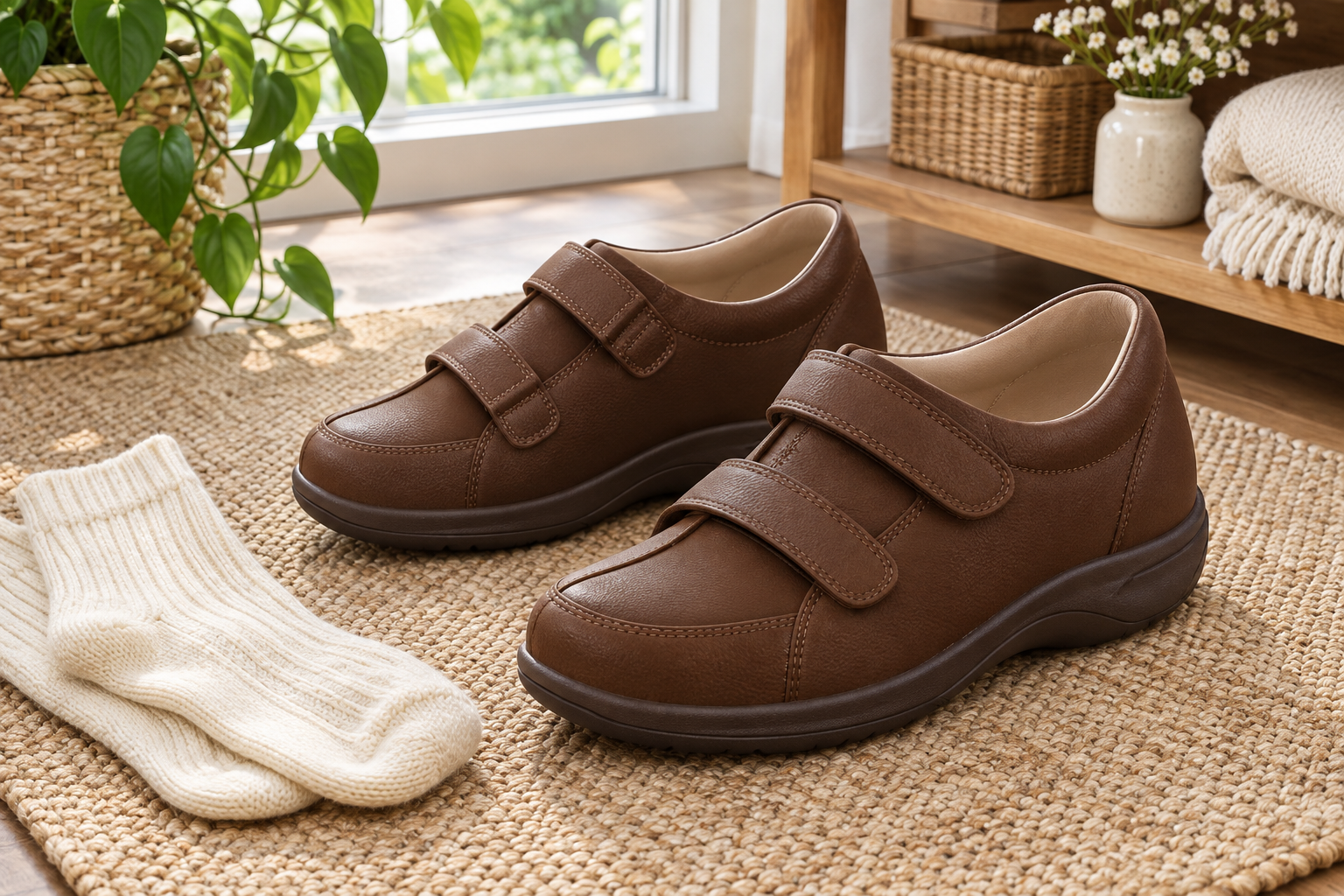
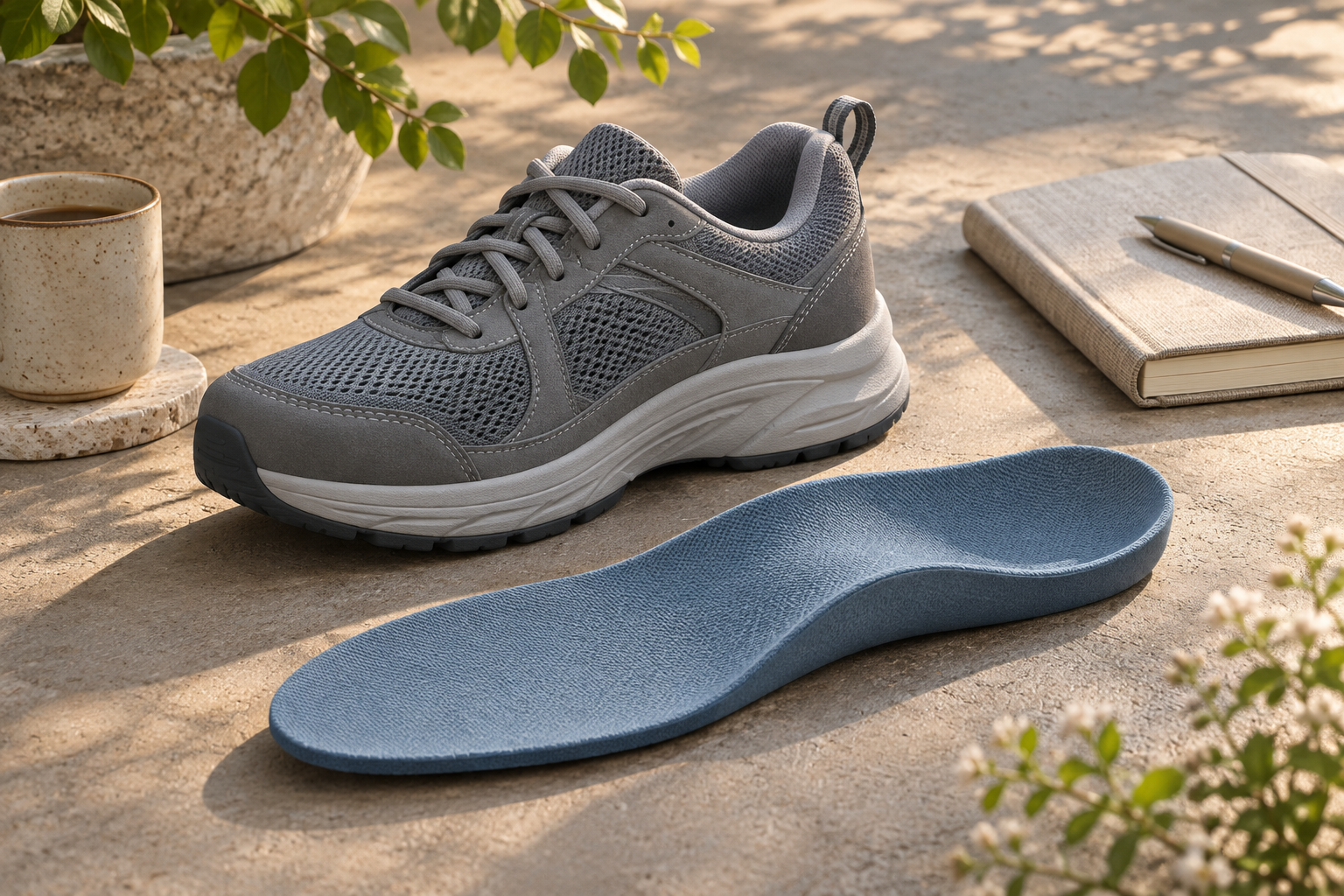
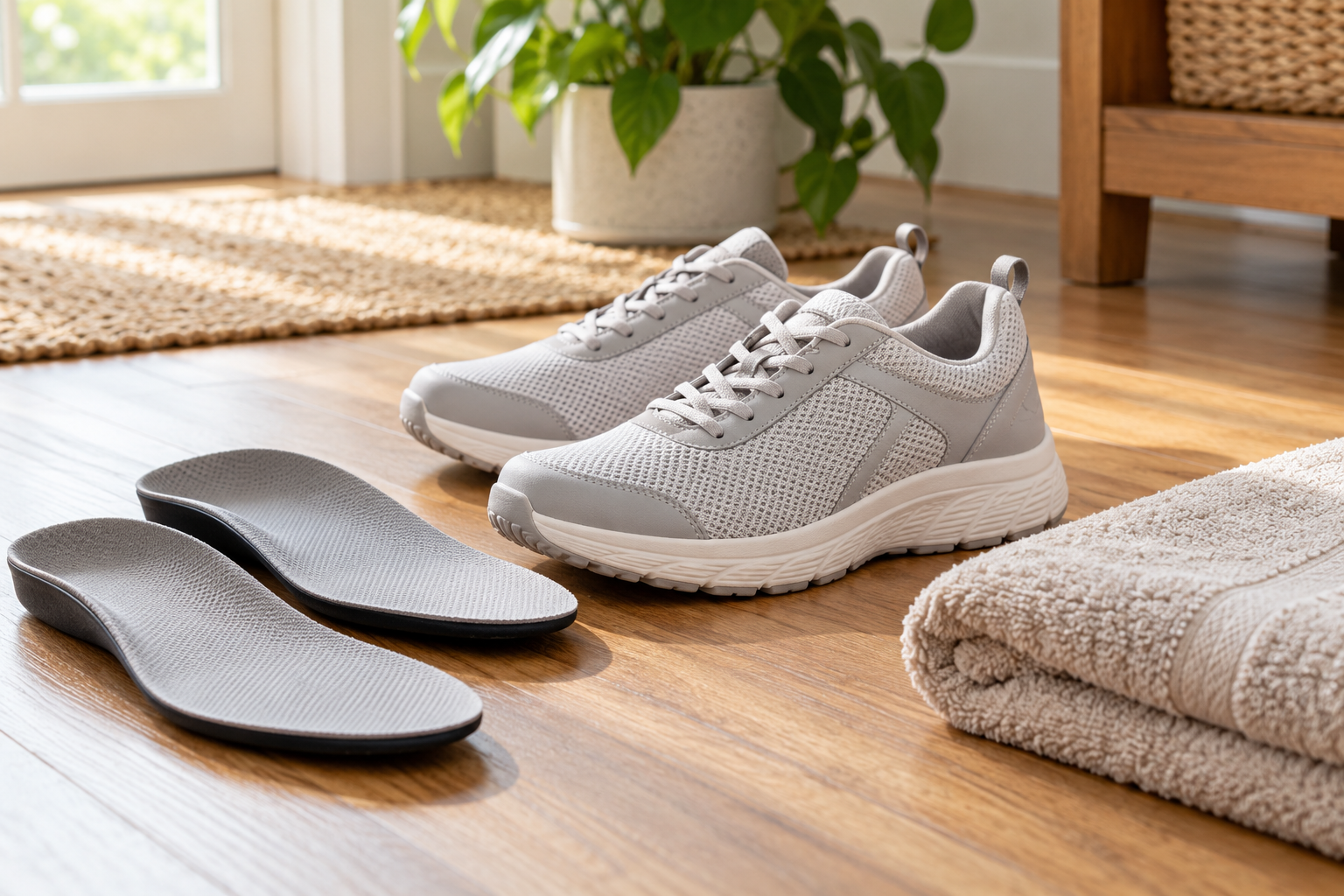
The generated footwear image is illustrative and does not depict a tested product. This article is based on desk research; hands-on wear testing is pending.
This review is not medical advice. Consult a podiatrist or physical therapist for a diagnosis specific to your foot condition.
Our latest news and trending topics