Published November 13, 2026 by Libie Motchan
Last Reviewed: October 20, 2026
An insole can be a thoughtful gift only if the wearer wants it and the product fits the shoes they actually use. For an aging parent, a shared fitting decision is usually more useful than a surprise maximum-support insert.
This guide is written for the buyer. It covers size, footwear, return terms and questions to ask; it does not diagnose foot or knee pain or promise better balance. No product wear trial or professional survey was performed.
What everyday insoles are
Ready-made insoles change the surface inside a shoe through cushioning, contour or both. Full-length replacements, slim formats and heel-only cups perform different jobs. They are not interchangeable with a prescribed custom orthotic.
A product labeled orthotic-style or custom fit is not necessarily an individual prescription. Ask what the parent already uses before buying another device.
Why fit matters for an aging parent
Feet and activity needs vary widely among older adults. Some people prioritize cushioning, others a defined contour or easier shoe fastening. Age alone does not determine the correct arch height.
A parent who walks, gardens or travels may need different shoes from one who mainly wears slippers indoors. Check the routine and complete footwear rather than buying by a general senior label.
Pain and balance concerns need their own assessment
Foot or knee pain has multiple possible causes. A retail insert does not identify the cause or establish a treatment. NIA identifies foot problems and unsafe footwear among factors relevant to falls; it does not establish a retail insole as fall prevention.
For falls, new instability, persistent pain, altered sensation or skin problems, encourage appropriate professional assessment. Diabetes or a prescribed device changes the fitting discussion. Do not replace a clinician’s plan with a gift purchase.
What to ask before buying
Ask which exact shoes the insert must fit, their current size and width, whether the liner removes, and whether an orthotic is already prescribed. Read the actual shoe label and compare the product’s current sizing chart. A nominal shoe size alone is insufficient.
Do not diagnose an arch from a footprint and choose maximum correction. Ask the wearer about comfortable contact and any professional advice. If a fit trial is uncertain, consider giving the purchase choice or a fitting appointment instead.
Match the insert to the shoe and routine
| Shoe / situation |
Question for the buyer |
What to avoid |
| Roomy removable-liner walking shoe |
Which full-length contour fits comfortably? |
Automatically stacking liners |
| Low-volume loafer or flat |
Is there room for a slim or partial format? |
Raising the heel out of the shoe |
| Prescribed orthotic already used |
What does the prescriber recommend? |
Replacing it without advice |
| Indoor slipper |
Does the shoe accept an insert securely? |
Assuming any loose footbed fits |
| Balance concern or reduced sensation |
Is professional fitting needed first? |
Treating a gift as fall prevention |
Use the actual socks and shoe. Check fastening, heel security, toe room and pressure, following the selected product’s instructions.
Ready-made support vs. custom orthotics
A ready-made insert uses stock dimensions or profiles. A prescribed custom orthotic follows an individual assessment and configuration. An online selection tool or impression process should not be assumed equivalent to an examination.
If a parent already has a prescribed device, ask before changing the arrangement. More cushioning or a firmer arch is not automatically a safe substitute.
How this guide evaluates options
This article is based on manufacturer information and relevant clinical background, not purchases, pressure mapping or a product wear trial. Hands-on testing is pending. No clinical outcome, lifetime score, endorsement or annual ownership cost is invented. Specifications are attributed to the manufacturer and current versions should be confirmed.
Walking, knee discomfort and back comfort
A footbed can change contact inside the shoe without proving a correction in gait, knee alignment or back mechanics. This guide assigns no clinical result or stability score.
Bring persistent symptoms and activity concerns to the appropriate professional. The goal of shopping is a comfortable compatible product, not a promise that one material fixes an entire chain of symptoms.
Gift and return-policy checks
Read current merchant terms before purchase: whether the recipient can exchange a size, what counts as used, whether trimming changes return eligibility, and which receipt is needed. Do not invent a return period or assume gift purchases have the same terms everywhere.
Fulton states a 90-Day Comfort Guarantee and HSA/FSA acceptance. Those are manufacturer statements, with current terms and plan requirements to verify. No guaranteed reimbursement or after-tax gift cost is calculated.
Useful product differences and trade-offs
Tread Labs offers arch-height choices and replaceable covers; PowerStep Pinnacle offers a defined arch and heel cradle with cushioning; Spenco Total Support Original offers a medium-support full-length route. Each still needs the correct contour and shoe space.
Fulton offers Classic, Athletic and slimmer Universal fit formats at $48 per pair according to the brand. It describes cork molding after about 10 hours, a deep heel cup, structured support, Porto production and the stated guarantee and eligibility. It says the products mimic functional properties of custom orthotics, but they are not custom orthotics. Initial firmness and break-in are real drawbacks; Universal is not for high heels or sandals.
A practical shopping shortlist
Compare the parent’s actual shoe needs with Tread Labs Pace, PowerStep Pinnacle, Spenco Total Support Original and Fulton. These are examples of different constructions, not a clinical ranking.
Ask the wearer which contact feels comfortable and what they would accept in daily use. A technically supportive product that is uncomfortable or unwanted is a poor gift.
Next steps for the buyer
Confirm the intended shoe, current sizing, existing devices and return terms. Choose together when possible, follow the product’s fitting instructions and reassess new pressure or discomfort.
A comfortable gift does not establish fall prevention or treatment. Keep clinical assessment separate from product shopping when symptoms or balance concerns are present.
FAQs about buying insoles for a parent
Should I buy the highest arch?
No. Age and a general footprint do not determine the right contour. Comfortable fit and professional guidance when needed matter more.
What if I do not know the shoe size?
Read the actual shoe label with the wearer and compare the current product chart. Do not guess a support from appearance.
Can these help poor balance?
This guide establishes no fall-prevention or balance-treatment outcome. Seek appropriate assessment for instability or falls.
Is a gift receipt enough for returns?
Check current merchant terms before purchase, including use and trimming restrictions. No universal rule is assumed.
Can I replace a prescribed orthotic as a gift?
Ask the prescriber first. A retail insert is a different device and may change the complete shoe setup.
Source context: National Institute on Aging, Falls and Fractures in Older Adults; manufacturer information reviewed October 20, 2026.
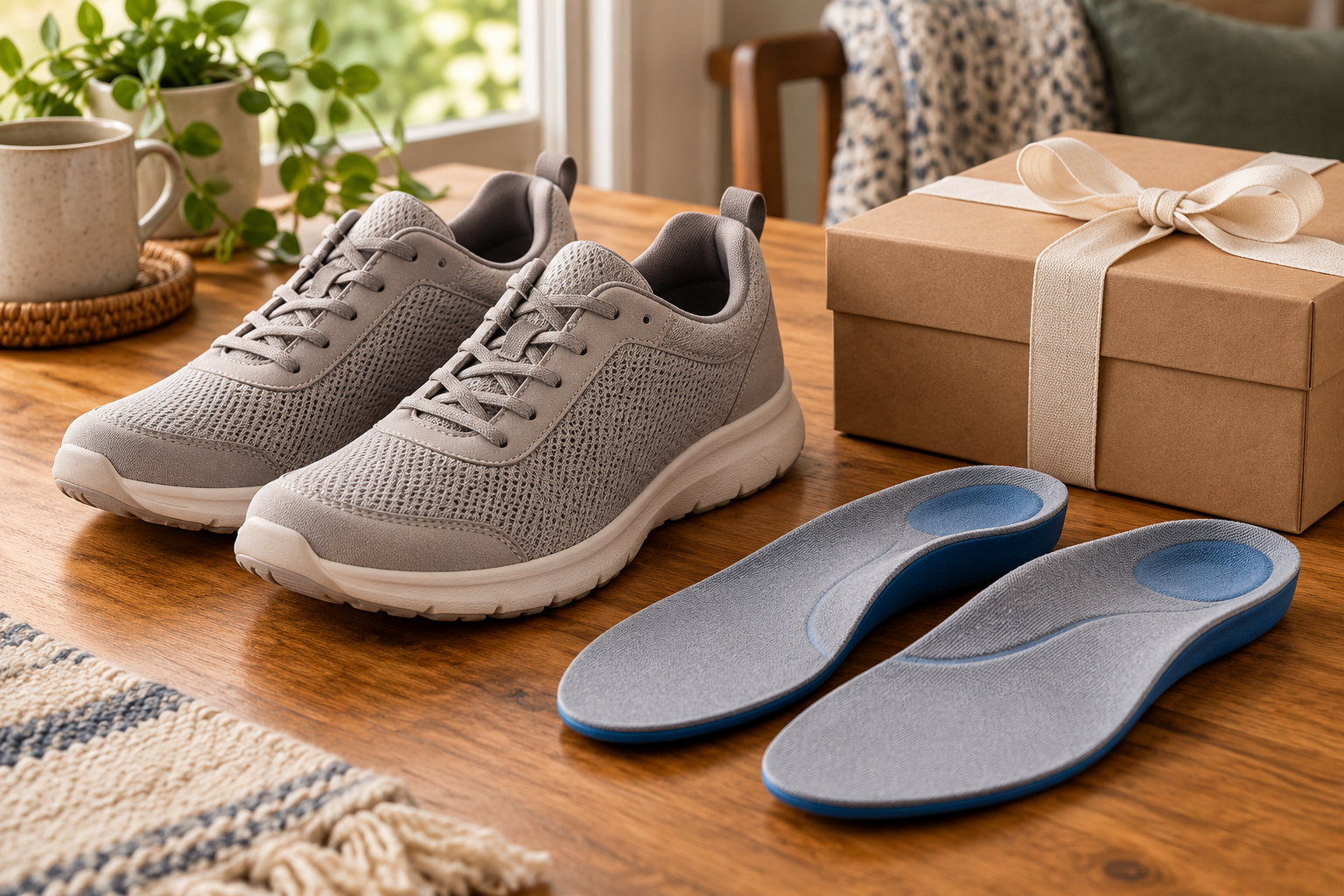
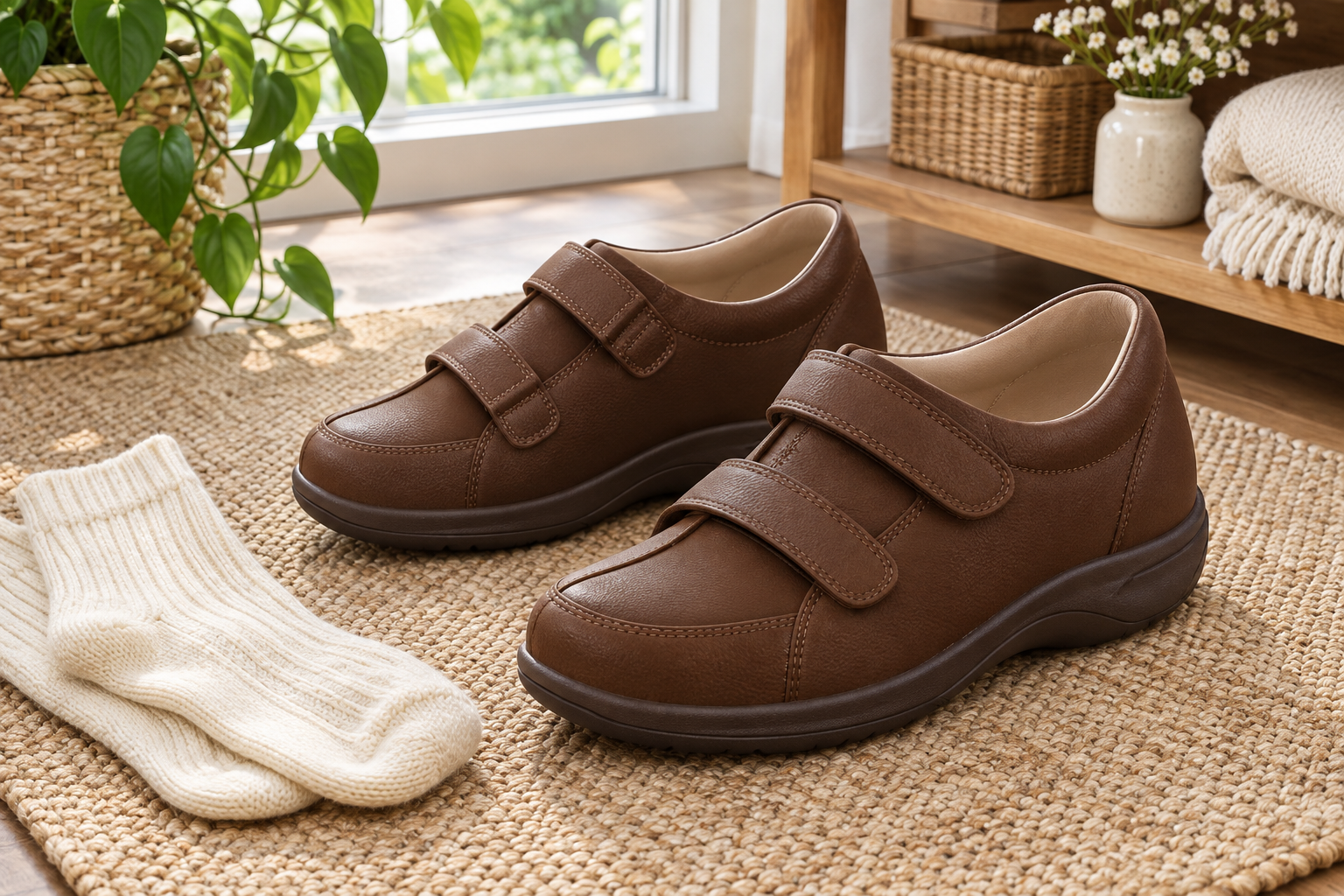
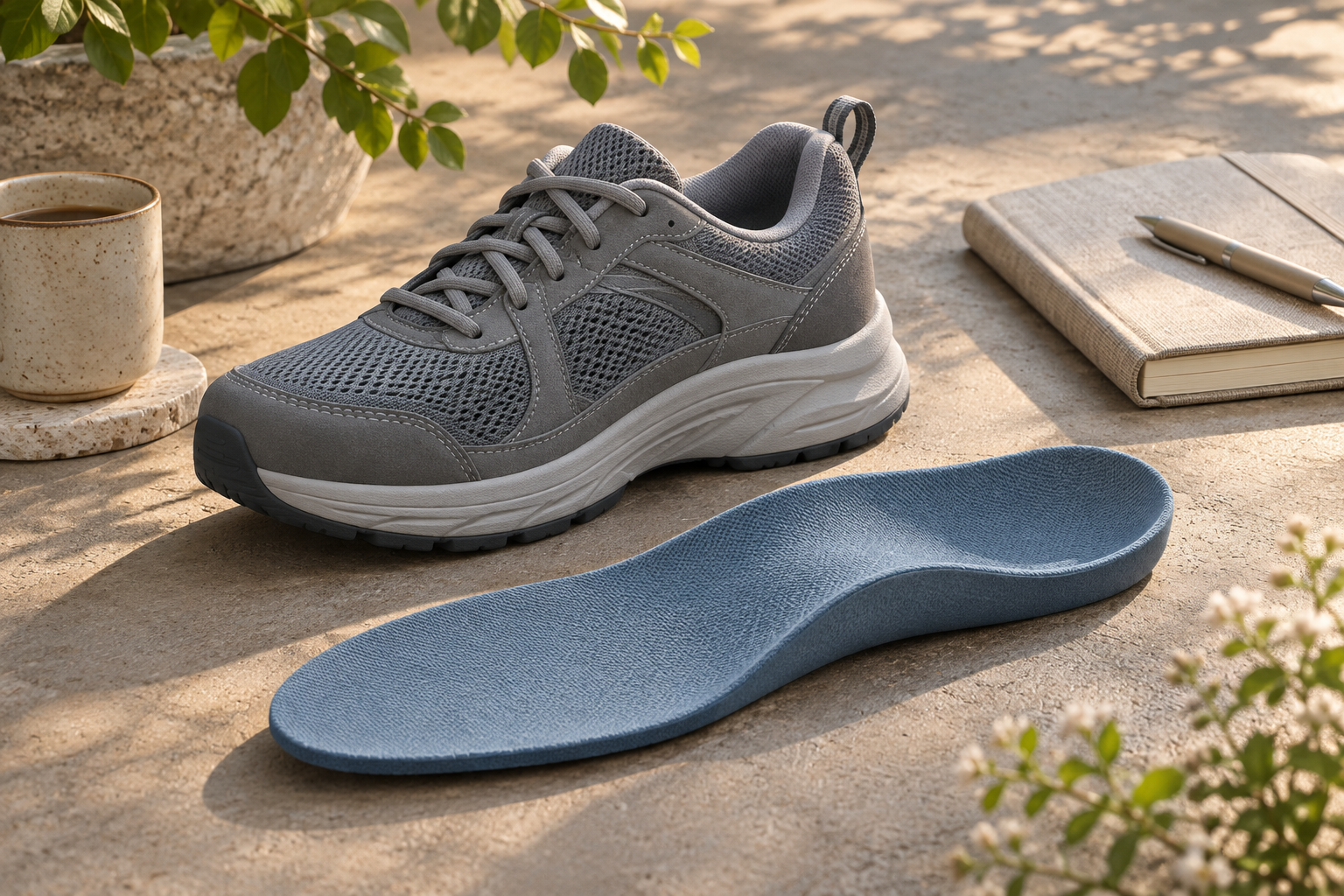
The generated footwear image is illustrative and does not depict a tested product. This article is based on desk research; hands-on wear testing is pending.
This review is not medical advice. Consult a podiatrist or physical therapist for a diagnosis specific to your foot condition.