Published November 15, 2026 by Libie Motchan
A useful wellness gift starts with the person, not the diagnosis on a product box. Someone with heel pain may welcome help choosing shoes; someone recovering from surgery may prefer dinner delivery to another piece of recovery equipment. Ask what would make their day easier before buying anything that changes how they walk.
This guide compares seven gift categories and representative products for people with plantar fasciitis, arthritis and post-surgery restrictions. It is desk research, not a clinical trial or hands-on product test. Wear testing is pending for all products discussed. No listed product has been shown by this review to treat a condition.
Last Reviewed: November 15, 2026.
This review is not medical advice. Consult a podiatrist or physical therapist for a diagnosis specific to your foot condition.
Why wellness gifts for foot pain deserve special guidance
Plantar fasciitis and heel pain
NHS guidance includes shoes with cushioned heels and arch support, insoles and gentle stretching among self-care options. It also advises avoiding backless slippers and flip-flops. A product described as a “recovery slide” therefore should not automatically become a plantar-fasciitis gift. Ask whether the recipient has already found that style comfortable and appropriate.
Arthritis-related pain and stiffness
Arthritis UK emphasizes well-fitting footwear, room for the toes and avoiding pressure or rubbing. Different joints and symptoms call for different adjustments. An aggressive arch contour or tight slipper can be uncomfortable even when marketed as supportive. The recipient's existing footwear advice takes priority over a gift guide.
After foot surgery
A surgeon's instructions determine weight-bearing, footwear and wound care. Ordinary slippers and slides are not substitutes for a prescribed boot or postoperative shoe. Do not infer permission to use massage, heat or different footwear from permission to start walking. Practical help and non-foot-contact gifts are easier to adapt to a recovery plan.
Keep expectations proportionate
A material, price or “orthopedic” label does not establish a treatment benefit. Favor a product the recipient wants, with an appropriate fit and workable exchange policy, over promises of correction or a cure. Persistent, worsening or unexplained symptoms warrant assessment.
What to look for in wellness gifts for plantar fasciitis, arthritis and post-surgery feet
Fit and compatibility
- Confirm the recipient's size, width and actual shoe model before choosing inserts.
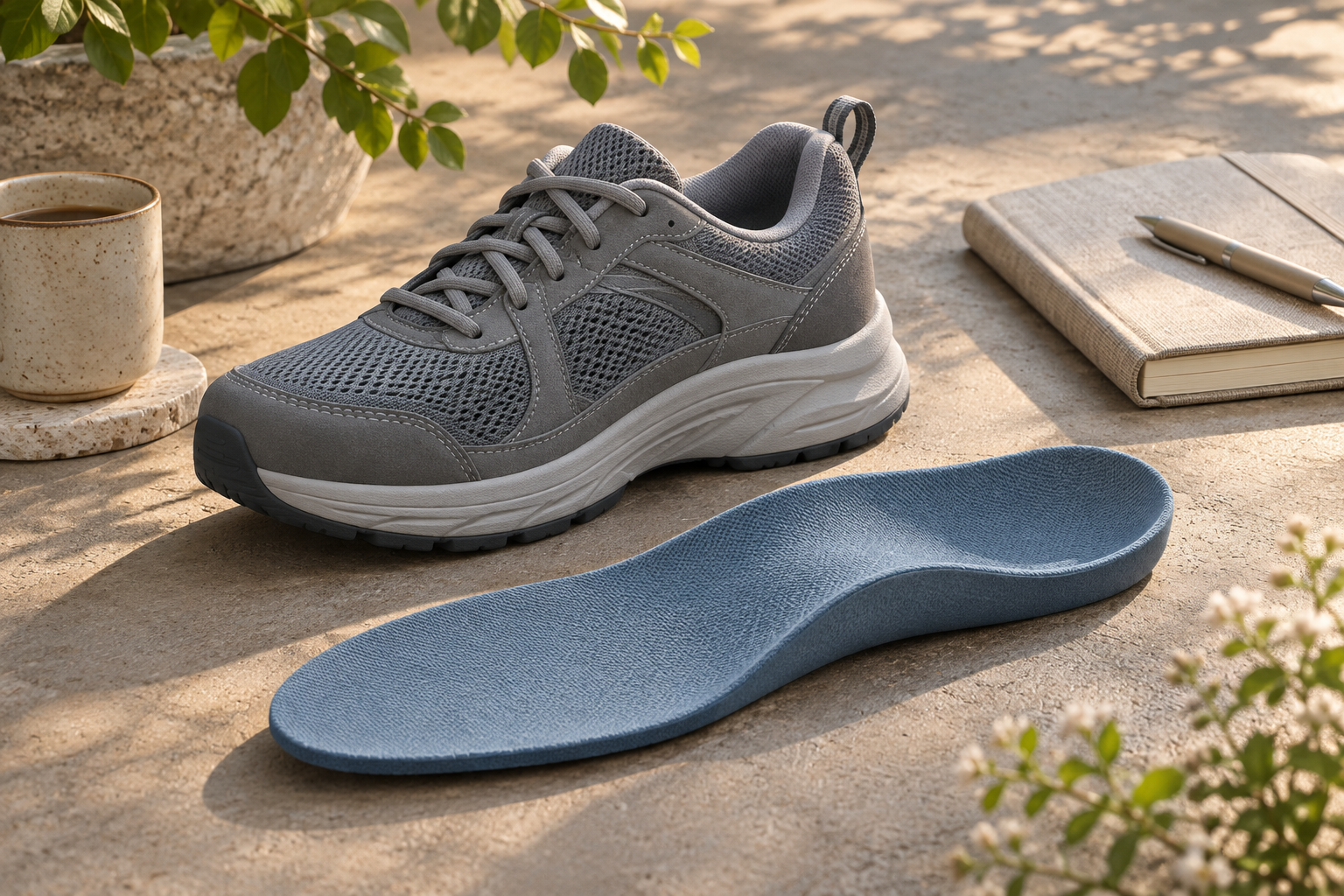
- Check whether the factory liner can be removed and whether an insert leaves enough toe and heel room.
- Ask whether they already use prescribed orthotics. Do not stack inserts or replace prescribed devices on a gift-giver's judgment.
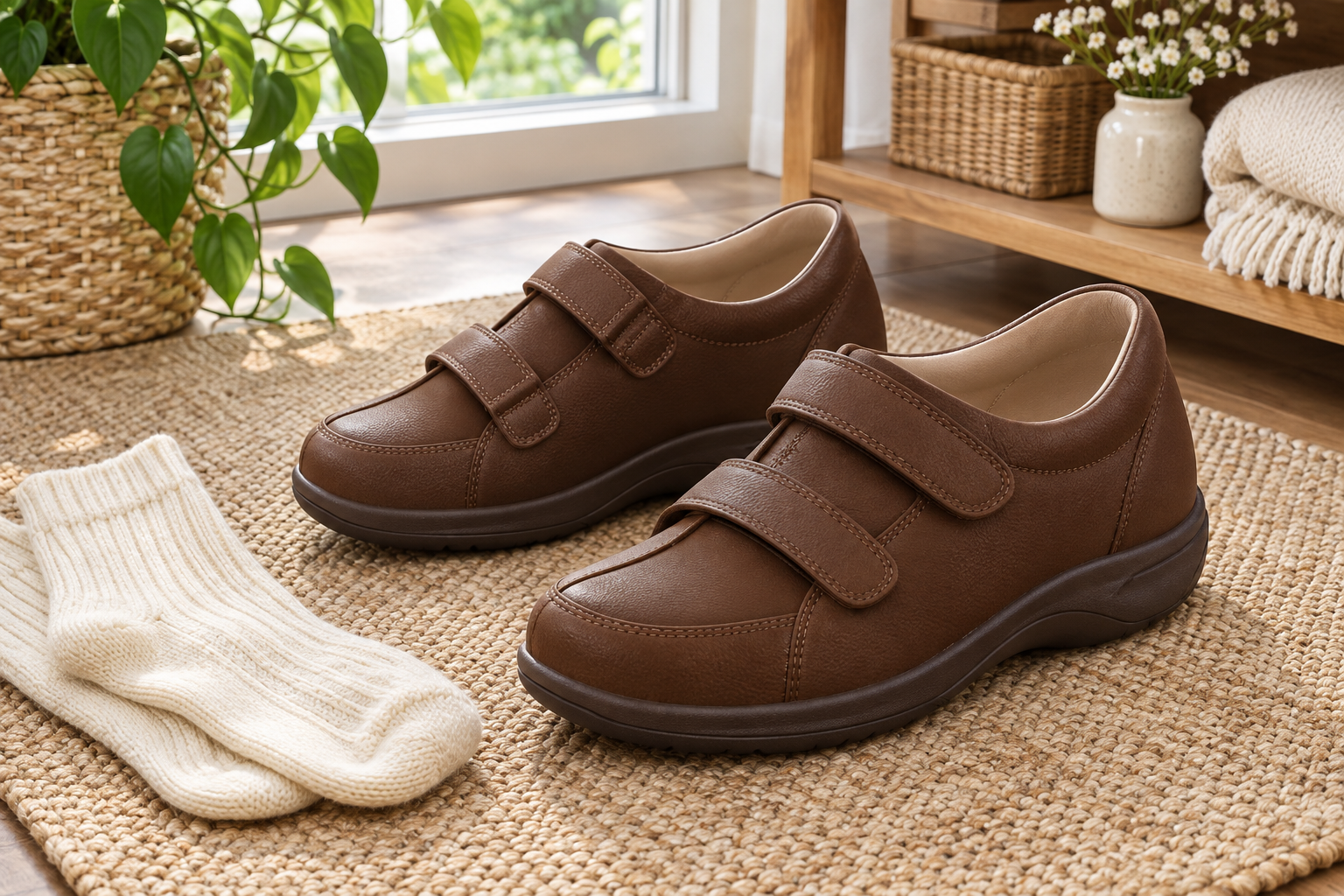
- For indoor footwear, check heel security, easy fastening and the surfaces where it will be worn. A textured-looking sole is not proof of tested slip resistance.
- Include the receipt and check whether the return period starts at purchase or delivery and whether trying the product affects eligibility.
Five useful questions about footwear
Material durability: What is it made from and how is it cared for? We have not measured comparative lifespan.
Arch contact over time: Does the shape remain comfortable for this wearer? A firmer contour is not universally better.
Pressure distribution: Are there tight spots or rubbing? Manufacturer descriptions do not substitute for measured pressure data.
Breathability: Does the lining suit the recipient's climate, socks and preference for warmth?
Value per year of use: Will they use it often? Without wear data, a precise annual cost would be speculative.
Self-care extras need the same thought
A simple unheated throw, favorite book or offer of errands can support a restful evening without making treatment claims. Heat, soaking and massage are not default gifts for every painful foot. CDC guidance advises people with diabetes not to soak their feet and warns that reduced sensation can conceal injury. Ask for clinical advice before foot-contact devices when there is neuropathy, poor circulation, a wound or recent surgery. Do not treat a gift as an instruction to start a new therapy.
How these gifts can fit into everyday routines
For heel or arch pain
Start with the shoes the recipient actually wears. If they want an insert, choose one compatible with those shoes and their preferred support level. Do not use a new insole to compensate for a worn-out or unsuitable shoe. An at-home option should stay secure without toe gripping; an open-back design is not a default recommendation for plantar fasciitis.
For arthritis
Ask about fastenings, width and dexterity as well as cushioning. The most elaborate product is not necessarily the easiest to put on. A recipient may value help shopping for a comfortable pair more than a surprise size. Keep rest-oriented accessories optional and avoid promising that warmth or massage will relieve their condition.
During postoperative recovery
Offer meals, transport, household help or entertainment first. Let the care team decide when a footwear transition is appropriate. Do not massage a surgical area, introduce heated slippers or choose a slide because it is called a recovery product. A gift can make a restricted routine more pleasant without changing the rehabilitation plan.
Comparison: wellness gift types for foot and arch pain
| Gift category |
Practical appeal |
Fit or use requirement |
Main limitation |
| Structured inserts, including PowerStep, Spenco, Tread Labs and Fulton |
Change the contour and cushioning inside existing shoes |
Correct size, shoe depth and comfortable arch shape |
Can crowd shoes or feel too firm; not a replacement for prescribed orthotics |
| Supportive house shoes |
An indoor footwear option |
Secure fit, suitable width and appropriate sole |
Open-back styles may not suit heel pain, balance concerns or recovery restrictions |
| Recovery slides |
Easy on/off and open coverage |
Recipient already prefers and can safely wear the style |
No heel closure; not postoperative equipment |
| Manual rollers or massage tools |
Compact, optional relaxation accessory |
Recipient wants one and has no relevant restriction |
Pressure may be uncomfortable; no treatment result established here |
| Heated massagers or slippers |
Warmth for a seated routine |
Careful suitability check and manufacturer instructions |
Poor surprise gift where sensation, circulation or skin integrity is uncertain |
| Self-care bundle or practical help |
Flexible and easy to personalize |
Know preferences and arrange help with consent |
A bundle can still contain unsuitable foot-contact products |
| Magnetic therapy gadgets |
Often marketed for pain |
Evidence would need to support the specific claim |
Not a priority in this guide; marketing is not proof of benefit |
These are categories, not interchangeable medical treatments. Match the gift to what the recipient can use comfortably and to any existing care instructions.
Best wellness gift options for foot pain in 2026
The order below puts flexible, low-fit-risk gifts first, then shoe-dependent products and optional devices. It is not a ranking of clinical effectiveness. All product assessments are based on desk research; hands-on testing is pending.
1. A personalized self-care bundle or practical help
A book, unheated throw, favorite snack or offer to handle meals and errands can be tailored without guessing an arch height. A footwear-store gift card lets the recipient choose a suitable pair themselves.
Best fit: Someone whose footwear needs are uncertain or whose recovery plan limits what they can use.
Advantages: Flexible budget, no prescribed-device substitution and room for personal preferences.
Drawback: A generic bundle may feel impersonal. Ask what help is welcome and avoid adding foot soaks, heat devices or massage vouchers without checking suitability.
2. Structured inserts: PowerStep, Spenco and Tread Labs
For a recipient who already wants inserts, compare the exact model rather than the brand alone. Tread Labs Pace offers selectable arch heights and replaceable top covers. PowerStep and Spenco offer other structured options; their models differ in dimensions and cushioning. Check their current product specifications rather than assuming every version has the same construction.
Best fit: Someone who knows their shoe size, has suitable removable liners and can choose their preferred contour.
Advantages: Multiple formats and support preferences can be compared; replaceable covers may be useful on models designed for them.
Drawback: Firmness or thickness may be uncomfortable, and selecting an arch height for another person is uncertain. No comparative pain or durability advantage is established here. Check the exact model's price and return conditions.
3. Fulton Classic Insole — $48 per pair
The Fulton Classic Insole is a full-length cork-based insert intended for compatible shoes with removable liners. Fulton describes its cork as molding with wear. That is a manufacturer description, not a custom prescription or a measured outcome from this review.
Best fit: A recipient who prefers a structured cork feel and has enough room in everyday sneakers or boots.
Advantages: A straightforward option for shoes the recipient already uses; a distinct alternative to other support constructions.
Drawback: The contour and initial firmness will not suit everyone. It may crowd low-volume shoes and should not replace a clinician-prescribed device without advice. Stop if it causes discomfort rather than assuming pain is necessary for break-in.
4. Fulton House Shoe — $120 per pair
The Fulton House Shoe combines a cork footbed with wool and a vegan-suede upper. Fulton describes a sturdy base for indoor use and brief trips outside. It is an open-back house shoe, not a closed-heel medical shoe; this review does not establish certified slip resistance or a rubber outsole specification.
Best fit: Someone who already likes this style, wants a structured indoor option and can wear it securely.
Advantages: Warm coverage and cork contour in a dedicated house shoe.
Drawback: Standard-width sizing, warmth and the open heel limit suitability. It is not our default gift for plantar fasciitis, fall risk or postoperative use. Check the manufacturer's whole-size guidance and the recipient's width before ordering.
5. Fulton Comfort Slide — $120 per pair
The Fulton Comfort Slide offers an open slide format with a cork-based footbed. It is a different style choice from an enclosed house shoe, not evidence of faster recovery.
Best fit: A recipient who prefers open footwear and already knows that a slide works for their routine.
Advantages: Easy on/off and less upper coverage than a warm slipper.
Drawback: The open heel and toes provide less containment and protection. It is not suitable for every balance concern, work environment or recovery plan. “Recovery” marketing does not make it a postoperative device.
6. Foot rollers and small massage tools
A plain manual roller or massage ball is compact and does not depend on shoe size. For an electronic example, Therabody Wave Solo is a textured vibrating ball. Electronics add charging and controls; they are not required to make a thoughtful gift.
Best fit: Someone who has requested a tool and already knows gentle pressure is appropriate for them.
Advantages: Small footprint and optional use while seated.
Drawback: Pressure and vibration can be unpleasant on sensitive feet. Do not select a device as treatment for numbness, a wound or recent surgery. Follow its instructions and stop if use hurts; this review does not establish a pain-relief outcome.
7. Heated foot massagers or heated slippers — a conditional choice
These remain a category to discuss with the recipient, rather than a specific model recommendation. We have not established one model's suitability or safety for the medical situations in this guide.
Best fit: Only a recipient who specifically wants this category and has confirmed it is appropriate for their circumstances.
Potential appeal: A warmth-focused seated routine, where use is suitable.
Drawback: Heat, compression and massage settings introduce more suitability questions than an ordinary gift. Do not choose these for reduced sensation, circulation concerns, a wound or postoperative recovery without clinical guidance. An unheated comfort item is a simpler alternative.
How we evaluated these wellness gifts
This is a desk-research comparison of manufacturer descriptions and general clinical guidance. We did not buy and wear every product, measure pressure, test slip resistance or calculate service life. All hands-on wear testing is pending. Product placement reflects gift practicality and stated compatibility, not measured clinical superiority.
| Review question |
What this guide can assess |
What remains untested |
| Fit and shoe compatibility |
Stated sizing and intended format |
Fit on the recipient's foot |
| Arch contact and pressure distribution |
Contour descriptions and space requirements |
Pressure mapping or changes over a day |
| Material durability |
Published materials and replaceable components |
Comparative lifespan |
| Breathability |
Upper and lining descriptions |
Temperature and moisture measurements |
| Value per year |
Price and likely usefulness as a gift |
Annual cost without lifespan data |
| Heat and massage |
Practical limitations and suitability questions |
Clinical benefit or safety for an individual |
Sources consulted include NHS plantar-fasciitis guidance, Arthritis UK's footcare and footwear guidance, CDC diabetes footcare guidance, and the linked manufacturer pages. General clinical guidance is not an endorsement of the listed brands. Product descriptions and prices can change; confirm the exact item and gift-return terms before purchase.
Choosing the right wellness gift
Start by asking whether the recipient wants a product for their feet. If yes, check the shoes they wear, size and width, existing orthotics and the style they already find comfortable. If those details are unclear, offer a shopping trip or gift card instead of guessing.
For postoperative recovery, practical help can be more immediately useful than new footwear. For chronic discomfort, respect what the person has already learned about fit. Avoid treating expensive technology, strong arch contours or “orthopedic” wording as a guarantee.
Before buying:
- Confirm the exact model, size and width.
- Check compatibility with prescribed footwear or orthotics.
- Keep heat, massage and soaking out of a surprise treatment bundle.
- Read exchange conditions and include the receipt.
- Give the recipient permission to exchange the gift without feeling obliged to wear it.
A useful gift makes their routine easier. It does not need to promise relief to be thoughtful.
FAQs about wellness gifts for plantar fasciitis, arthritis and recovery
What is useful for someone with plantar fasciitis?
A contribution toward properly fitting footwear or an insert they have chosen can be practical. NHS guidance supports cushioned heels and arch support, while advising against backless slippers. Do not assume every recovery slide fits that guidance.
How do I choose an insole for a friend or parent?
Check shoe size, width, removable liners and available depth, then let the recipient help choose the contour. Keep any prescribed orthotic plan in place. If you cannot confirm fit, a gift card is more flexible.
Are house shoes or recovery slides appropriate after foot surgery?
Only if the recipient's care team has approved the exact type for their current recovery stage. Permission to bear weight does not automatically authorize ordinary slides. Meals, transport and household help avoid that footwear guesswork.
Can supportive slippers help arthritis-related discomfort?
Some people find appropriately fitted footwear useful, but fit and tolerance vary. Arthritis UK's advice about fit does not prove a particular slipper treats arthritis. Do not force a firm contour or narrow upper onto a sensitive foot.
Which gifts should I skip?
Skip cure claims, unrequested magnetic therapy gadgets and surprise heat or massage devices when suitability is uncertain. For people with diabetes, follow their care plan; CDC advises against foot soaking. Unheated comfort items and practical help are alternatives.
How long will cork insoles or house shoes last?
This review has no comparative wear-test data and cannot promise a fixed lifespan. Use, fit and care matter. Replace or reassess an item when its fit, condition or comfort changes rather than relying on a generic annual estimate.
This review is not medical advice. Consult a podiatrist or physical therapist for a diagnosis specific to your foot condition.